Mgahinga Gorilla National Park is Uganda’s smallest national park, but it stands out as one of the most biologically and culturally significant conservation areas in East Africa. Covering just 33.7 square kilometers, the park plays a crucial role in protecting the endangered mountain gorillas that inhabit the Virunga Mountains ecosystem. Its compact size makes it unique compared to other parks in Uganda, offering visitors a more intimate and less crowded safari experience.
Despite its size, Mgahinga forms part of the larger Virunga Conservation Area, a transboundary region that connects Uganda with Virunga National Park and Volcanoes National Park. This ecological network is one of the most important habitats for mountain gorillas in the world. The park’s nickname, “where gold meets silver,” reflects its rare wildlife—golden monkeys and silverback gorillas—making it a must-visit destination for primate lovers and conservation enthusiasts.
The history of Mgahinga Gorilla National Park dates back to 1930 when the area was first designated as a game sanctuary under British colonial administration. Over the years, its boundaries and conservation status evolved, reflecting growing awareness of the need to protect its unique wildlife and ecosystems. On May 9, 1991, it was officially gazetted as a national park.
The primary goal of establishing the park was to protect the endangered mountain gorillas and their habitat within the Virunga region. Over time, Mgahinga has become an important center for conservation, research, and eco-tourism. Its integration into the larger Virunga Conservation Area highlights the importance of cross-border collaboration in preserving shared natural resources.
Mgahinga Gorilla National Park holds deep cultural significance, particularly for the indigenous Batwa people, who were the original inhabitants of the forest. For centuries, the Batwa lived as hunter-gatherers, relying on the forest for food, medicine, and shelter. Their deep knowledge of the ecosystem is an important part of the park’s cultural heritage.
Today, visitors can experience the Batwa Cultural Trail, a guided tour led by Batwa community members who share their traditional way of life, survival skills, and spiritual connection to the forest. This experience not only enriches visitors’ understanding of the park but also supports local communities and promotes cultural preservation.
Mgahinga Gorilla National Park is located in Kisoro District in southwestern Uganda, near the borders of Rwanda and the Democratic Republic of Congo. The park lies approximately 519 kilometers from Kampala, Uganda’s capital, and the journey by road typically takes between 9 to 10 hours. The route passes through scenic landscapes, including rolling hills, terraced farmlands, and rural communities, giving travelers a glimpse into Uganda’s countryside.
For those seeking a faster option, domestic flights are available from Entebbe International Airport to Kisoro Airstrip, followed by a short drive to the park. Its strategic location within the Virunga region also makes it easily accessible from Rwanda, especially for travelers coming from Kigali. This cross-border accessibility makes Mgahinga a convenient addition to multi-country East African safari itineraries.
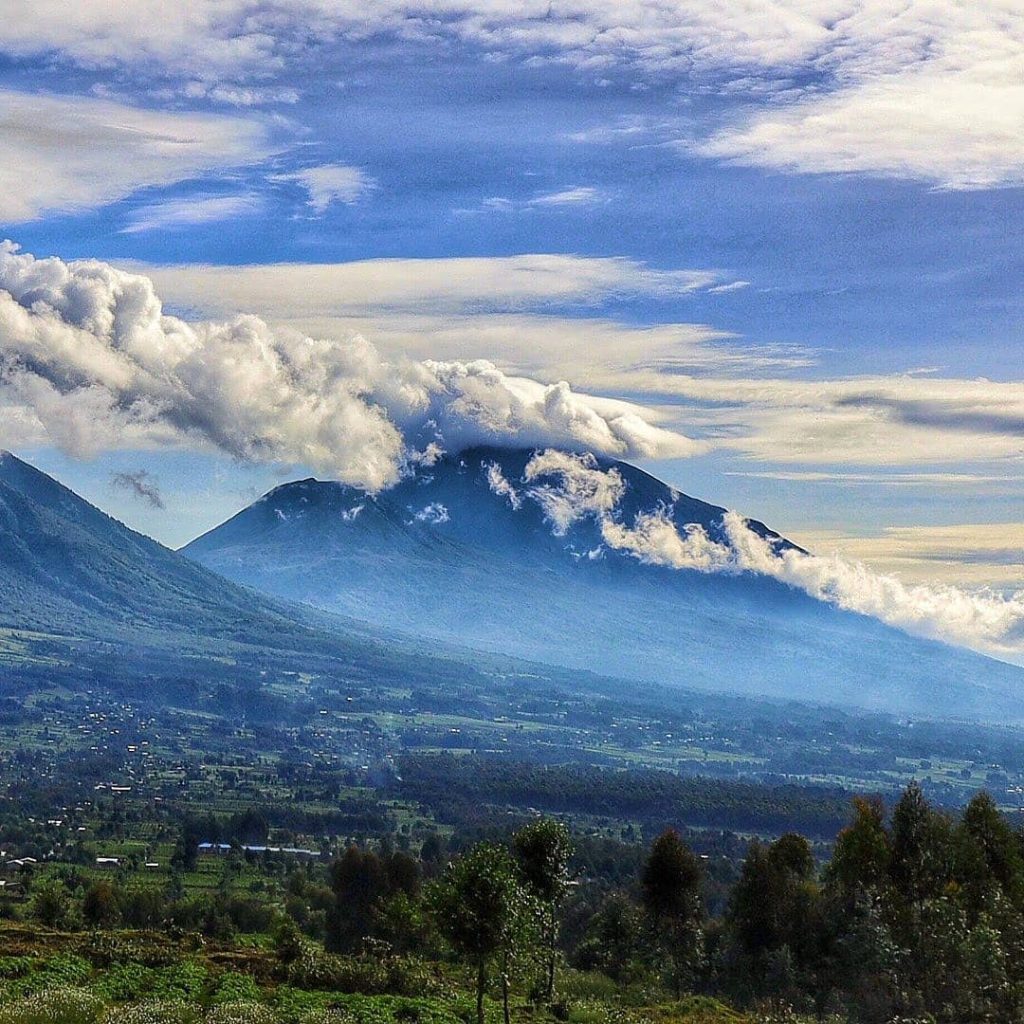
The park’s landscape is defined by three spectacular extinct volcanoes that are part of the Virunga Mountain Range: Mount Muhabura, Mount Gahinga, and Mount Sabyinyo. These towering volcanic cones dominate the skyline and create a dramatic backdrop that is both rugged and breathtaking. Mount Muhabura, the highest at 4,127 meters, offers challenging hikes and panoramic views stretching across Uganda, Rwanda, and Congo.
The volcanic terrain supports a variety of ecosystems that change with altitude, from dense forests at lower levels to alpine vegetation near the peaks. The slopes are often covered in mist, giving the park a mystical atmosphere that enhances its appeal. These volcanoes are not only scenic landmarks but also vital habitats for wildlife, making Mgahinga one of the most visually striking parks in the region.
Mgahinga Gorilla National Park is best known for its population of mountain gorillas, one of the world’s most endangered species. The park is home to the famous Nyakagezi Gorilla Family, a habituated group that visitors can track under guided tours. These gorillas are part of the larger Virunga population, and their movements often cross international borders, highlighting the importance of regional conservation efforts.
In addition to gorillas, the park is one of the few places in the world where you can track golden monkeys, a rare and endemic species found only in the Virunga region. Other wildlife includes forest elephants, buffaloes, bushbucks, and various small mammals. Although sightings of larger animals are less frequent due to the park’s dense vegetation, its primate experiences are among the best in Africa.
Mgahinga’s vegetation is incredibly diverse due to its volcanic soils and varying altitudes. The park features a mix of montane forests, bamboo forests, and afro-alpine vegetation, each supporting different species of flora and fauna. The bamboo zone, in particular, is an important habitat for golden monkeys and other wildlife.
As you move higher up the slopes, the vegetation transitions into moorland and heath, with unique plant species adapted to colder conditions. This ecological diversity not only enhances the park’s beauty but also plays a critical role in sustaining its wildlife. The constant mist and rainfall contribute to lush greenery throughout the year, making the park a vibrant and ever-changing landscape.
Mgahinga Gorilla National Park experiences a cool and moist climate due to its high altitude, which ranges from 2,227 meters to 4,127 meters above sea level. Daytime temperatures average around 20°C, while nighttime temperatures can drop to as low as 9°C. The temperature decreases further as you ascend the slopes, creating varying microclimates within the park.
The park has two main rainy seasons: from March to May and from October to November. During these months, trails can become slippery and trekking conditions more challenging, but the scenery is at its most lush and vibrant. The dry seasons, from June to September and December to February, are generally considered the best times for gorilla trekking due to easier hiking conditions.
Mgahinga Gorilla National Park holds deep cultural significance, particularly for the indigenous Batwa people, who were the original inhabitants of the forest. For centuries, the Batwa lived as hunter-gatherers, relying on the forest for food, medicine, and shelter. Their deep knowledge of the ecosystem is an important part of the park’s cultural heritage.
Today, visitors can experience the Batwa Cultural Trail, a guided tour led by Batwa community members who share their traditional way of life, survival skills, and spiritual connection to the forest. This experience not only enriches visitors’ understanding of the park but also supports local communities and promotes cultural preservation.