About Mgahinga Gorilla Trekking Experience
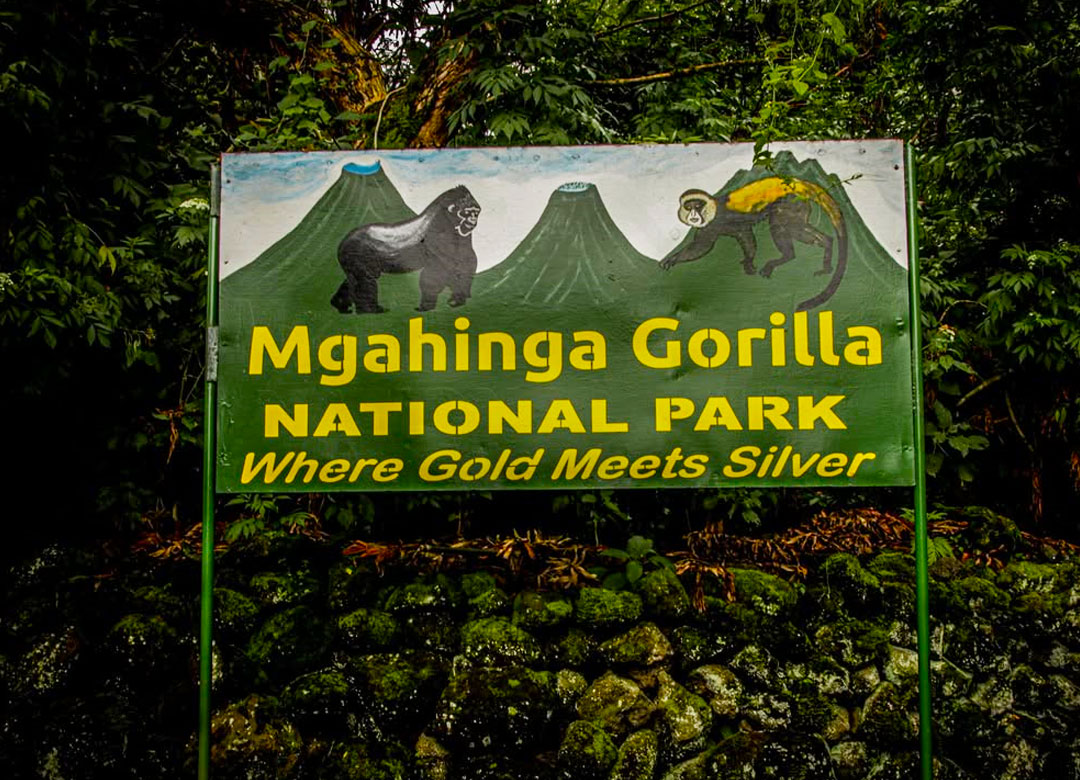
Gorilla trekking in Mgahinga Gorilla National Park offers an intimate and unforgettable experience in Uganda’s smallest yet most scenic national park. Covering just 33 square kilometers, the park sits at an altitude of up to 4,127 meters and is located in Kisoro District in the southwestern corner of Uganda, bordering both Rwanda and the Democratic Republic of Congo. Established in 1991, the park plays a vital role in protecting the endangered mountain gorillas.
Mgahinga is one of only four destinations in the world where you can encounter mountain gorillas in their natural habitat. The others include Volcanoes National Park, Virunga National Park, and Bwindi Impenetrable National Park.
The park’s landscape is truly breathtaking, dominated by three extinct volcanoes—Mount Sabinyo, Mount Muhavura, and Mount Gahinga—whose slopes create a dramatic backdrop. These lush forests provide ideal shelter and abundant food for mountain gorillas and a variety of other wildlife species.
Although located in Uganda, Mgahinga is easily accessible from Kigali, with a scenic drive of about three hours via the Cyanika border. Alternatively, travelers can reach the park from Kampala by road (approximately 9 hours) or by a chartered flight from Entebbe International Airport, which takes about one hour.
Mgahinga is home to around 80 mountain gorillas, but only one habituated group—the Nyakagyezi family—is available for trekking. This group was once known for crossing borders between Uganda, Rwanda, and Congo, but has now settled in Uganda for several years. One of the key advantages of trekking in Mgahinga is its exclusivity; with only one habituated group, just 8 permits are issued per day, ensuring a quiet and personal experience.
Due to limited permits, visitors are strongly advised to book in advance through a licensed tour operator recognized by the Uganda Wildlife Authority. A gorilla trekking permit in Uganda costs $800, making it more affordable compared to Rwanda’s $1,500.
Gorilla trekking in Mgahinga is available year-round, but the best time to visit is during the dry seasons—from December to February and June to October—when trails are less muddy and vegetation is thinner, making navigation easier.
The trekking experience begins with an early morning briefing at the Ntebeko Gate, where visitors are guided on the rules and expectations. Compared to Bwindi Impenetrable National Park, treks in Mgahinga are often shorter because the Nyakagyezi family occupies a relatively smaller range. However, the difficulty can vary depending on the gorillas’ location on a given day. If they move toward the volcanic slopes, the hike can become more physically demanding.
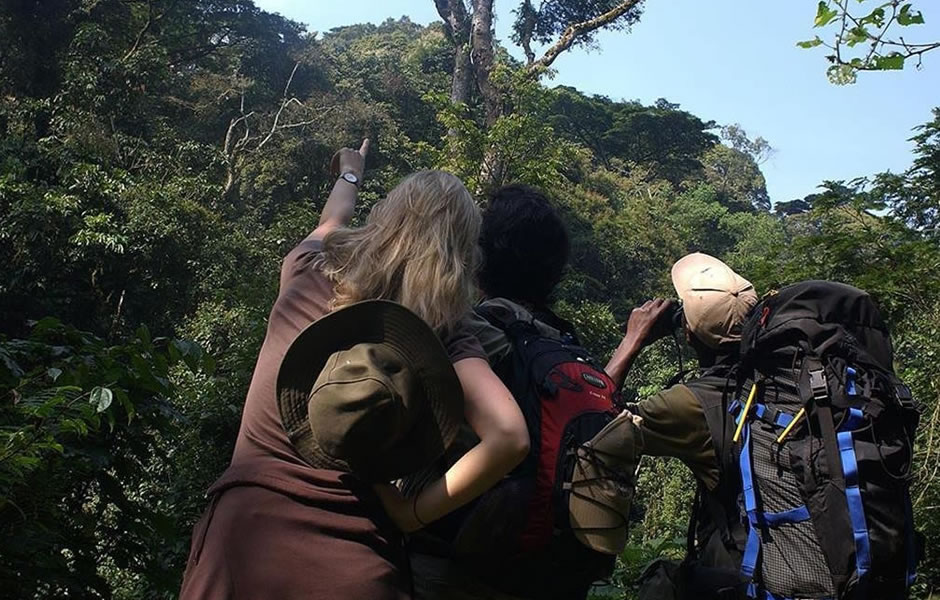
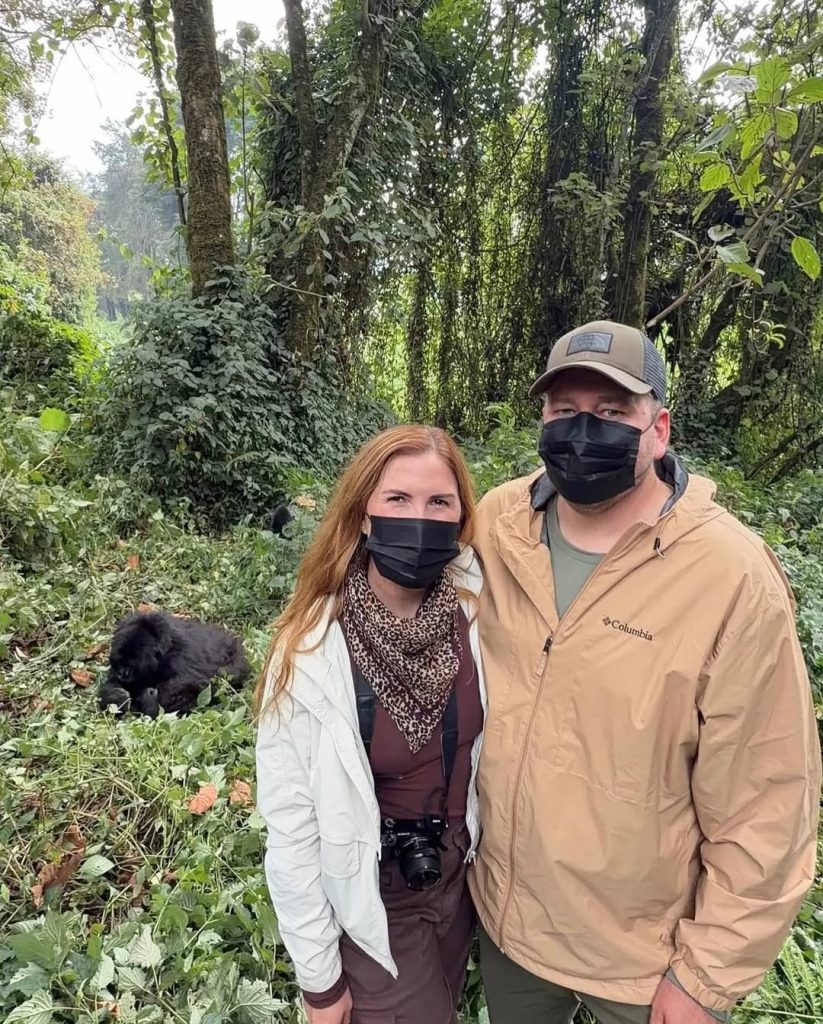
Once the gorillas are located, visitors are allowed a magical one hour in their presence. This is the moment to take photos, observe their behavior, and truly connect with these gentle giants in the wild—an experience that stays with you for a lifetime.
How doesMgahinga Gorilla Trekking Experience compare to Bwindi?
Mountain gorillas are found in only three countries in the world—Uganda, Rwanda, and the Democratic Republic of Congo. In Uganda, gorilla trekking takes place in Bwindi Impenetrable National Park and Mgahinga Gorilla National Park—each offering a unique experience.Bwindi is home to about 80% of Uganda’s mountain gorilla population, roughly 450 individuals, and is a UNESCO World Heritage Site. It is the more popular destination, with over 17 habituated gorilla families available for trekking. In contrast, Mgahinga has only one habituated group—the Nyakagyezi family—yet it stands out for its uniqueness, including having one of the highest numbers of silverbacks in the region.
Other activities during Mgahinga Gorilla Trekking Experience
Mgahinga Gorilla National Park is not just about gorilla trekking—it is a diverse and vibrant destination rich in wildlife and cultural experiences. The park is home to endangered golden monkeys, colobus monkeys, and other primates, as well as wildlife such as leopards, porcupines, buffaloes, bushbucks, golden cats, bush pigs, and tortoises. It is also the ancestral home of the Batwa pygmies, whose cultural heritage adds a unique human connection to the forest.
Golden Monkey Trekking
Golden monkey trekking is one of the most exciting activities in Mgahinga. These rare primates are found only within the Virunga ranges, just like mountain gorillas, and in Uganda, they are exclusively located in Mgahinga. Known for their striking golden-orange fur and playful nature, golden monkeys are among the most beautiful and photogenic primates in the world. As an endangered subspecies of the blue monkey, they are a major attraction for visitors seeking a unique wildlife encounter.
Mgahinga Gorilla Trekking Experience | Nature Walks
Nature walks in Mgahinga offer a refreshing way to explore the park’s stunning landscapes. Guided by experienced rangers, visitors can walk along forest trails, volcanic slopes, swamps such as the Rugezi Swamp, plantations, and even along the scenic shores of Lake Mutanda. These walks provide excellent opportunities for birdwatching, identifying unique plant species, and encountering smaller forest animals and primates in their natural habitat.
The Batwa Trail Experience | Mgahinga Gorilla Trekking Experience
The Batwa Trail is a powerful cultural experience that takes visitors into the history of the forest’s original inhabitants—the Batwa people. For thousands of years, the Batwa lived as hunter-gatherers, relying entirely on the forest for survival and sheltering in places like the Garama Caves. After the park was established, they were relocated outside the forest to support conservation efforts.
Today, Batwa guides lead visitors along the trail, sharing their traditional knowledge and way of life. The experience includes demonstrations of hunting techniques, fruit gathering, fire-making, honey collection, as well as traditional music, singing, and dancing. Visitors are often invited to participate, making it an immersive and memorable cultural encounter.
Cave Exploration
Cave exploration in Mgahinga takes you to the historic Garama Caves, located at the base of Mount Muhavura. These caves once served as important shelters and meeting points for the Batwa, especially during conflicts with neighboring communities. Today, the caves are inhabited by bats and offer a fascinating glimpse into both natural and cultural history. Exploring them requires a good flashlight, and local legends say the caves stretch deep enough to reach into Rwanda.
Mountain Climbing in Mgahinga
Mgahinga Gorilla National Park is one of Uganda’s most rewarding destinations for mountain climbing, offering adventurous hikers an unforgettable opportunity to explore the dramatic peaks of the Virunga Volcanoes. Located in the southwestern corner of Uganda, the park forms part of the larger Virunga Conservation Area, a chain of volcanic mountains shared between Uganda, Rwanda, and the Democratic Republic of Congo.
The park is home to three extinct volcanoes—Mount Muhabura, Mount Gahinga, and Mount Sabinyo—each offering a distinct climbing experience shaped by altitude, terrain, and scenery. These volcanic peaks rise above bamboo forests, montane vegetation, and afro-alpine landscapes, creating some of the most scenic hiking routes in East Africa.
Mount Muhabura (4,127m)
Mount Muhabura is the highest and most challenging volcano in Mgahinga Gorilla National Park, rising to an impressive 4,127 meters above sea level. Its name, which means “the Guide,” reflects its towering presence that dominates the skyline of the Virunga region and serves as a natural landmark visible from far distances across Uganda, Rwanda, and the Democratic Republic of Congo.
The climb begins in the fertile foothills where local communities cultivate crops on rich volcanic soils. From here, the trail gradually ascends into the park boundary, where the landscape quickly transforms into dense montane forest filled with birdsong and the sounds of nature. As hikers continue upward, the vegetation shifts into thick bamboo zones, which are often damp, slippery, and filled with wildlife activity, including primates and forest birds.
Beyond the bamboo belt, the terrain becomes more demanding as it enters the afro-alpine zone. Here, the air becomes thinner, temperatures drop noticeably, and the vegetation changes into sparse heath and moorland. The trail grows steeper and more physically challenging, requiring endurance, steady pacing, and determination. The climb involves long uphill stretches with few flat sections, making it one of the toughest hikes in the Virunga volcano chain.
Despite the difficulty, the journey is filled with rewarding moments. Along the way, climbers enjoy breathtaking views of rolling hills, crater landscapes, and neighboring volcanic peaks. Wildlife sightings, although less frequent at higher altitudes, may still include birds adapted to alpine conditions and occasional primate activity in the lower zones.
The final ascent to the summit is the most demanding section, but it offers a deeply satisfying achievement upon completion. At the top, hikers are rewarded with panoramic views stretching across Uganda, Rwanda, and the Democratic Republic of Congo. On clear days, the vast Virunga ranges unfold dramatically in every direction, creating one of the most spectacular mountain vistas in East Africa.
At the summit, a beautiful crater lake lies quietly within the volcanic rim, adding to the surreal atmosphere of the peak. The combination of altitude, scenery, and accomplishment makes Mount Muhabura not just a hike, but a truly unforgettable high-altitude adventure.
Mgahinga Gorilla Trekking Experience | Mount Gahinga (3,474m)
Mount Gahinga is the most accessible and least challenging of the three volcanoes in Mgahinga Gorilla National Park, making it an ideal choice for hikers who prefer a moderate, scenic, and enjoyable climbing experience. Its gentle slopes and well-defined trails allow visitors of different fitness levels to explore the mountain without the extreme physical demands required by its taller neighbors, Mount Muhabura and Mount Sabinyo.
The hike begins at the park boundary and immediately immerses climbers in a lush montane environment filled with fresh mountain air and rich vegetation. As the trail progresses, it enters dense bamboo forests that form one of the most beautiful and ecologically important zones of the Virunga region. This bamboo belt is especially famous for being a habitat for endangered golden monkeys, which are often seen feeding, jumping through branches, and playing in groups. The forest is also home to other primates, birds, and small forest creatures, making the early stages of the hike both scenic and lively.
Unlike the steeper volcanic climbs in the region, Mount Gahinga offers a gradual and steady ascent. The trail is relatively wide and less demanding, allowing hikers to move at a comfortable pace while enjoying the surrounding natural beauty. The calm atmosphere of the forest, combined with the soft sounds of wildlife and rustling bamboo, creates a peaceful trekking experience that feels more immersive than strenuous.
As hikers gain elevation, the vegetation gradually changes, transitioning from thick bamboo to afro-montane and moorland zones. The landscape becomes more open, with unique high-altitude plant species such as giant lobelias and heathers appearing along the trail. These changes in vegetation offer a fascinating glimpse into how ecosystems adapt to altitude and climate variations within the same mountain.
The final stretch to the summit is gentle compared to other Virunga volcanoes, making it accessible even for less experienced hikers. At the top, visitors are rewarded with a wide, shallow crater swamp surrounded by lush greenery. This tranquil summit landscape feels almost untouched, offering a peaceful and reflective atmosphere after the climb.
From the summit of Mount Gahinga, hikers can enjoy sweeping views of the surrounding Virunga volcanoes, rolling hills, and distant landscapes stretching across Uganda, Rwanda, and the Democratic Republic of Congo. The combination of easy access, rich biodiversity, and beautiful scenery makes Mount Gahinga a perfect introduction to volcanic hiking in East Africa and a memorable experience for nature lovers.
Mount Sabinyo (3,669m) – The Three-Nation Peak
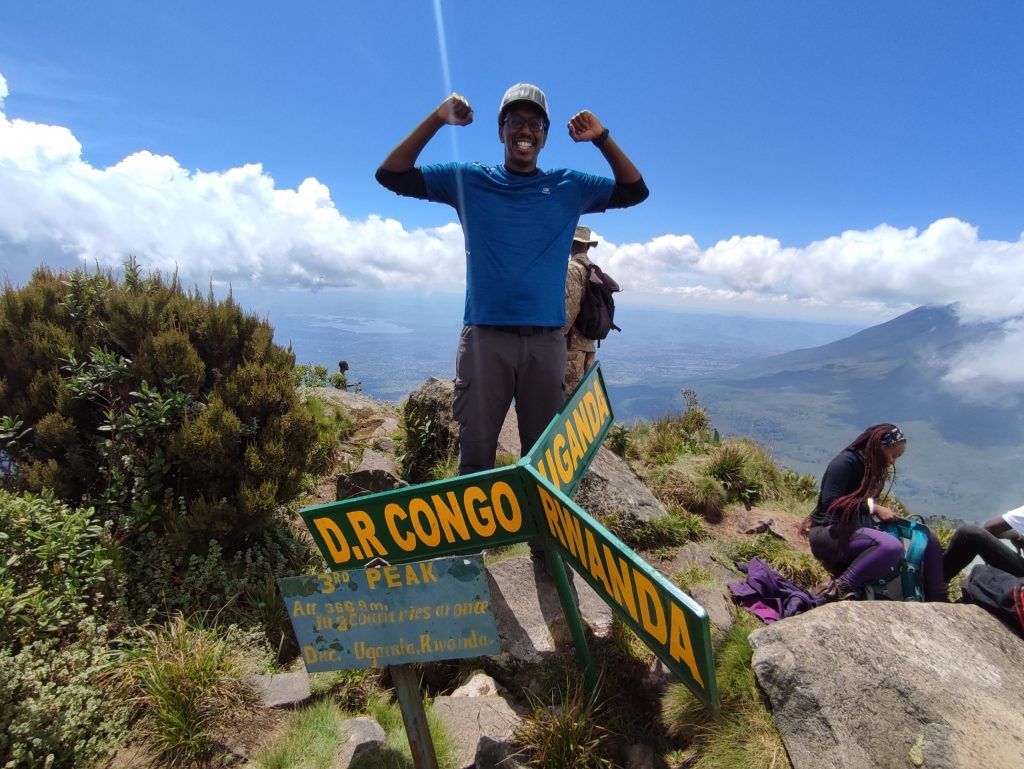
Mount Sabinyo is one of the most iconic and adventurous volcanoes in Mgahinga Gorilla National Park, offering hikers a truly unique experience in East Africa. Its name is derived from the local word meaning “old man’s teeth,” a reference to its deeply eroded, jagged summit that resembles worn-down teeth. What makes this mountain especially remarkable is that its summit marks the exact meeting point of three countries—Uganda, Rwanda, and the Democratic Republic of Congo—allowing hikers to stand in all three nations at once.
The climb begins in the lower slopes of the park, where dense vegetation and fertile volcanic soils create a rich green landscape. The early sections of the trail are relatively manageable, winding through montane forest filled with birdsong and occasional sightings of primates. As hikers progress, the terrain begins to change, becoming steeper and more rugged, signaling the start of a more demanding ascent.
One of the defining features of Mount Sabinyo is its extremely steep and technical terrain. Unlike other volcanoes in the region, Sabinyo requires climbers to navigate narrow ridges, deep gullies, and unstable volcanic slopes. Wooden ladders are installed along the steepest sections to help hikers ascend safely. These ladders add an adventurous and slightly thrilling element to the climb, especially in areas where the terrain drops sharply on both sides.
As altitude increases, the vegetation becomes more sparse, transitioning into afro-alpine zones characterized by open landscapes, rocky outcrops, and unique high-altitude plant species. The climb demands both physical strength and mental focus, as every step requires careful balance and steady movement. However, the effort is consistently rewarded with breathtaking views across the Virunga volcanic chain.
From different points along the trail, hikers can see sweeping panoramas of crater lakes, rolling hills, bamboo forests, and distant volcanic peaks stretching across Uganda, Rwanda, and the Democratic Republic of Congo. The scenery changes constantly with elevation, making the journey visually spectacular from start to finish.
The final approach to the summit is the most challenging section, involving steep ridges and careful ladder climbs. Once at the top, hikers are rewarded with one of the most extraordinary experiences in Africa—standing simultaneously in three countries. The summit is narrow, dramatic, and unforgettable, offering a true sense of accomplishment and awe.
Mount Sabinyo is not just a hike; it is an adventure that combines physical challenge, geological wonder, and international uniqueness. It remains one of the most rewarding climbs in East Africa for travelers seeking something truly exceptional.
Birdwatching in Mgahinga Gorilla Trekking Experience
Mgahinga Gorilla National Park is one of Uganda’s most rewarding birding destinations, offering exceptional opportunities to explore the rich avifauna of the Virunga volcanic landscape. The park shelters over 200 bird species spread across diverse habitats, including montane forests, bamboo zones, swamps, gorges, and alpine vegetation found on the slopes of the extinct volcanoes.
Birding in Mgahinga is best experienced with an experienced local bird guide who understands the park’s trails and habitats. Guided walks increase your chances of spotting rare and endemic species while also helping you appreciate the ecological richness of this unique environment.
Among the notable species recorded in the park are the Archer’s Robin-Chat, Banded Prinia, Barred Long-tailed Cuckoo, Black Kite, Blue-headed Coucal, Blue-headed Sunbird, Cape Robin-Chat, Chestnut-throated Apalis, and Collared Apalis. Other remarkable sightings include Doherty’s Bush-Shrike, Double-collared Sunbird, Dusky Crimsonwing, Dusky Long-tailed Cuckoo, Dusky Turtle Dove, Equatorial Akalat, Firefinch, Grauer’s Warbler, Grey-capped Warbler, and Handsome Francolin.
The park is also home to several Albertine Rift endemics and high-altitude specialists such as Kivu Ground Thrush, Lagden’s Bush-Shrike, Mackinnon’s Fiscal, Montane Oriole, Mountain Masked Apalis, Olive Pigeon, Olive Thrush, Olive Woodpecker, African Paradise Flycatcher, Pin-tailed Whydah, Red-throated Alethe, Regal Sunbird, Rwenzori Batis, Rwenzori Nightjar, and the striking Rwenzori Turaco.
Other frequently sighted species include Shelley’s Crimsonwing, Speckled Mousebird, Strange Weaver, Strip-breasted Tit, Waxbills, White-necked Raven, White-eyed Slaty Flycatcher, White-starred Robin, Yellow-eyed Black Flycatcher, and Yellow-vented Bulbul, among many others.
Birding in Mgahinga is a truly immersive experience, combining the thrill of spotting rare species with the breathtaking scenery of volcanic mountains and lush forests. Whether you are a seasoned birder or a nature enthusiast, the park offers an unforgettable opportunity to explore one of Uganda’s most biodiverse and scenic birding environments.