Mgahinga Gorilla National Park, though the smallest national park in Uganda, is remarkably rich in biodiversity, supporting a wide range of wildlife species across its diverse habitats. The park lies within the Virunga Mountain ecosystem, a region known for its ecological importance and high levels of endemism. While about 39 mammal species have been officially recorded, it is believed that the actual number could be much higher, possibly exceeding 80 species due to the park’s varied terrain and connection to neighboring protected areas.
Among the most notable mammals is the endangered mountain gorilla, which draws global attention to the park. Large mammals such as elephants and buffaloes also roam the forest, while elusive predators like leopards and golden cats inhabit the dense vegetation. Other species, including bushbucks, giant forest hogs, side-striped jackals, and spotted hyenas, contribute to the park’s rich wildlife diversity. The presence of the rare golden monkey, a primate found only in the Virunga region and a few forests in Central Africa, further highlights Mgahinga’s conservation significance.
Mgahinga Gorilla National Park, though small in size, supports a surprisingly wide range of mammal species, making it an important refuge within the Virunga ecosystem. Official records indicate about 39 mammal species, but researchers believe that as many as 80 to 90 species may inhabit the park due to its connection with neighboring forests in Rwanda and the Democratic Republic of Congo. The most iconic species is the mountain gorilla, a globally endangered primate that thrives in the park’s dense montane forests. Other large mammals include elephants and buffaloes, which move through the forest and bamboo zones, often leaving signs such as footprints and feeding trails. The park is also home to the rare golden monkey, a striking primate with golden-orange fur that is unique to the Virunga region, as well as other monkeys like the blue monkey.
In addition to these well-known species, Mgahinga hosts a variety of elusive and nocturnal animals that are rarely seen but play a vital role in the ecosystem. Predators such as leopards, golden cats, serval cats, and spotted hyenas inhabit the forest, maintaining the natural balance of prey and predator. Smaller mammals like the side-striped jackal, giant forest hog, black-fronted duiker, and bushbuck are also present, often spotted along forest edges and trails. While many of these animals are shy and difficult to observe, their presence highlights the ecological richness of the park and the importance of preserving its habitats. Together, these species create a dynamic and interconnected wildlife community that contributes to Mgahinga’s biodiversity significance.
Mgahinga Gorilla National Park is a rewarding destination for bird lovers, offering a diverse range of bird species within a relatively small area. Around 79 species have been officially recorded, many of which belong to the Albertine Rift region, a globally recognized hotspot for endemic bird species. The park’s location within the Virunga Mountains and its varied habitats make it ideal for both resident and migratory birds. Species such as the Rwenzori turaco, bronze sunbird, olive woodpecker, and dusky turtle dove are among the highlights that attract birdwatchers to the park.
Although the current checklist is modest, it is believed that Mgahinga shares many species with the nearby Volcanoes National Park in Rwanda, where over 180 bird species have been recorded. This suggests that the true number of birds in Mgahinga could be significantly higher than documented. The combination of forest, bamboo, and high-altitude vegetation zones provides suitable habitats for a wide range of birds, from forest specialists to highland species. As a result, birding in Mgahinga offers both diversity and the chance to encounter rare and regionally unique species, making it an important site for avian conservation.
The vegetation of Mgahinga Gorilla National Park is a key factor behind its rich biodiversity, representing one of the rare afromontane forest ecosystems in Africa. At the lower altitudes, the park features patches of woodland and remnants of montane forest, although some of this vegetation was reduced due to human encroachment in the mid-20th century. Despite this, the remaining forest continues to support a wide range of wildlife. Moving higher up the slopes, the landscape transitions into a dense bamboo zone, which stretches across the slopes of Mount Sabyinyo and Mount Muhabura. This bamboo belt is particularly important as it provides food and shelter for species such as the golden monkey and other forest dwellers.
Above the bamboo zone lies the Hagenia-Hypericum belt, characterized by unique tree species adapted to cooler and higher elevations. This zone gradually gives way to the Ericaceous vegetation, which dominates the upper slopes of the volcanoes. At the highest elevations, the park features the Afro-alpine zone, marked by striking plant species such as giant lobelias and senecios. These plants are specially adapted to survive in harsh, high-altitude conditions and create a dramatic landscape that contrasts with the dense forests below. Together, these vegetation zones form a layered ecosystem that supports a wide variety of wildlife and contributes to the park’s ecological uniqueness.
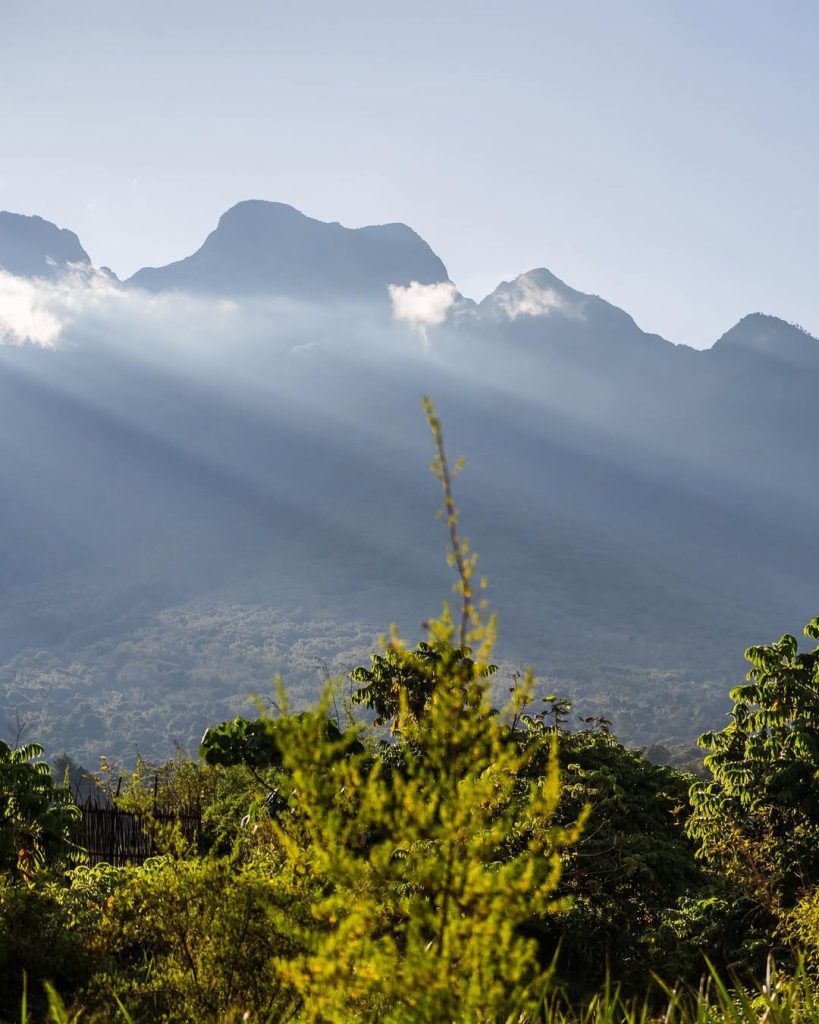
Exploring the biodiversity of Mgahinga Gorilla National Park is an enriching experience that allows visitors to fully immerse themselves in one of Africa’s most unique ecosystems. As you move through the park, whether on a guided nature walk, gorilla trek, or bamboo forest trail, every step reveals something new—from the distant calls of birds echoing through the forest to fresh animal tracks along the paths.
The changing vegetation zones, from dense montane forest to bamboo belts and high-altitude afro-alpine landscapes, create a constantly shifting environment that keeps the experience exciting and unpredictable.
Visitors may encounter primates like golden monkeys darting through the trees, spot colorful bird species perched among the branches, or simply enjoy the breathtaking scenery of the Virunga volcanoes rising above the forest canopy. What makes the experience truly special is the sense of connection to nature, where the diversity of life, both seen and unseen, creates a peaceful yet thrilling atmosphere that leaves a lasting impression on every traveler.