Expert Gorilla Photography Tips & 5 Best Cameras for Stunning Shots
Gorilla photography is one of the most unforgettable highlights of any safari in Uganda or Rwanda. Capturing powerful images of mountain gorillas in their natural habitat requires not only the right equipment but also the right techniques. Mastering essential gorilla photography tips and choosing the best camera gear are key steps we always recommend to our clients before heading out for a trek.
Photographing these gentle giants in dense rainforest conditions presents unique challenges—low light, unpredictable movement, and close yet controlled distances. However, with proper preparation, patience, and the right gear, you can capture breathtaking, once-in-a-lifetime moments.
Essential Gorilla Photography Tips & 5 Best Cameras
Use fast lenses with wide apertures (f/2.8–f/4) to perform well in low light conditions common in forest environments. Increase ISO sensitivity when needed (800–3200 or higher) to maintain fast shutter speeds and avoid blurry images. Flash photography is strictly prohibited during gorilla trekking as it can disturb the animals, so rely on natural light and camera settings instead.
Stabilizing your camera is also very important—use image stabilization or a monopod to reduce shake, especially in darker forest areas. Always focus on the gorilla’s eyes to capture emotional and compelling wildlife portraits. Patience is key, as gorilla behavior is unpredictable, so take time to observe interactions and natural moments.
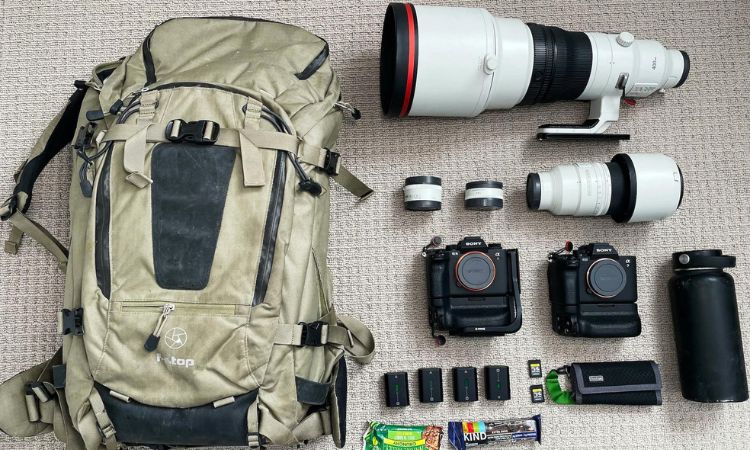
When selecting gear, the best cameras for gorilla photography include the Canon EOS R5, Nikon Z6 II, Sony Alpha a7 IV, Canon EOS 90D, and Nikon D7500. These models are highly recommended for their excellent autofocus, strong low-light performance, and reliability in challenging forest conditions.
Gorilla photography offers a rare opportunity to document one of the world’s most iconic and endangered species in its natural habitat. With the right preparation and equipment, you can capture powerful images while fully experiencing the magic of the trek.
Tips for Gorilla Photography in Uganda
Gorilla photography in Uganda—especially in destinations like Bwindi Impenetrable Forest and Mgahinga Gorilla National Park—is a once-in-a-lifetime experience. Capturing powerful images of mountain gorillas requires not only the right equipment but also the right technique, patience, and respect for wildlife. Below are detailed expert tips to help you take exceptional photos during your gorilla trek.
Best gorilla photography gear | Stay Low to the Ground for Better Composition
One of the most important techniques in gorilla photography is positioning. Whenever possible, sit or kneel to bring yourself to the gorillas’ eye level. This creates more natural, intimate, and emotionally engaging images. Shooting from a lower angle also helps reduce distractions in the background and makes your subject stand out more clearly.
Use a Wide Aperture for Stunning Background Blur
Uganda’s gorilla habitats are dense rainforests filled with vines, branches, and leaves. A wide aperture (such as f/2.8 to f/4) helps isolate your subject by blurring these busy backgrounds. This technique, known as shallow depth of field, allows you to create striking portraits where the gorilla remains sharp while the environment fades softly into the background.
Focus on the Eyes for Emotional Impact
The eyes of a mountain gorilla are incredibly expressive and should always be your primary focus point. Sharp, well-focused eyes create a powerful emotional connection between the subject and the viewer. For best results, try to shoot when soft natural light falls on the gorilla’s face, ideally at a slight angle (around 45 degrees), which enhances facial detail and depth.
Simplify the Background for Cleaner Images
While Uganda’s forests are breathtaking, they can easily overwhelm your subject with visual clutter. Carefully adjust your position to minimize distractions such as branches crossing the frame or bright patches of light. A clean background ensures the gorilla remains the clear focal point while still preserving the natural forest atmosphere.
Never Use Flash Photography
Flash photography is strictly prohibited during gorilla trekking in Uganda. It can startle or stress the gorillas and disrupt their natural behavior. Always ensure your flash is turned off before entering the trekking area. Instead, rely on natural light and adjust your ISO settings to compensate for low-light conditions.
Optimize Camera Settings for Forest Conditions
Uganda’s rainforest environment is often dark and humid, so adjusting your camera settings is crucial. Use a higher ISO (800–3200 or more if needed) to maintain faster shutter speeds. Choose continuous autofocus (AF-C) to track moving subjects and use burst mode to capture multiple frames during action moments.
Follow Uganda Gorilla Trekking Rules Strictly
Respect for wildlife is critical. Always maintain a minimum distance of 8–10 meters from the gorillas, as recommended by Uganda Wildlife Authority. Avoid sudden movements and follow instructions from your ranger guide at all times. These guidelines protect both visitors and gorillas while ensuring a safe photography experience.
Considerations for Wildlife Photography
Wildlife photography requires careful attention to camera performance and system capabilities to successfully capture animals in their natural and often unpredictable environments. One of the most important factors is autofocus speed and accuracy, as wildlife subjects are frequently in motion. A fast and reliable autofocus system ensures the camera can quickly lock onto the subject and maintain sharp focus, even when animals move suddenly, change direction, or are partially obscured by vegetation.
Another key consideration is the burst rate (frames per second), which allows the camera to capture a rapid sequence of images in continuous shooting mode. This significantly improves the chances of getting the perfect shot, especially during fast or fleeting moments such as a gorilla turning, a bird taking flight, or an animal interacting within a group. A higher fps rate provides more frames to choose from, increasing the likelihood of capturing sharp, well-timed action shots.
Durability and weather sealing are also essential because wildlife photography often takes place in harsh and unpredictable outdoor conditions such as rainforests, savannahs, and mountainous regions. A rugged, weather-sealed camera body protects internal components from dust, moisture, humidity, and temperature changes, ensuring consistent performance and reliability throughout the shoot.
Finally, the availability of high-quality lens options, particularly telephoto lenses, plays a critical role in wildlife photography. Telephoto lenses allow photographers to capture distant subjects without disturbing their natural behavior, while still producing sharp, detailed, and professionally composed images. A strong lens ecosystem also provides flexibility for different shooting situations, from wide environmental shots to tightly framed portraits of wildlife.
Best photography gear for Gorilla and Wildlife
Choosing the right camera is essential for capturing stunning wildlife and gorilla trekking moments, where subjects are often fast-moving, unpredictable, and photographed in challenging forest environments. Below are some of the best camera options that balance autofocus performance, burst speed, image quality, and portability.
Best gorilla photography gear | Canon EOS 90D
The Canon EOS 90D is a powerful APS-C DSLR designed for wildlife and action photography. It features a 32.5MP CMOS sensor, delivering high-resolution images with excellent detail—ideal for cropping distant subjects like gorillas in dense forest settings. Its Dual Pixel CMOS AF system with 45 cross-type points ensures fast and accurate subject tracking. With a burst rate of 10 fps, it performs well when capturing quick movements, while 4K UHD video recording adds strong versatility for filmmakers.
Price: Approximately $1,200 (body only).
Best gorilla photography gear | Nikon D7500
The Nikon D7500 is a reliable and rugged DSLR built for outdoor and wildlife use. It comes with a 20.9MP APS-C sensor that performs well in low-light forest conditions, such as Bwindi or Mgahinga. Its 51-point Multi-CAM 3500FX II autofocus system provides solid subject tracking, while an 8 fps continuous shooting speed helps capture key action moments. It also supports 4K UHD video recording, making it a well-rounded option for safari and trekking photography.
Price: Approximately $1,000 (body only).
Best gorilla photography gear | Sony Alpha A6400
The Sony A6400 is a compact and highly capable mirrorless camera, particularly known for its exceptional autofocus performance. It features a 24.2MP APS-C Exmor sensor and an advanced 425 phase-detection and 425 contrast-detection AF system, offering extremely fast and reliable eye and subject tracking—perfect for wildlife photography. With an 11 fps burst rate and 4K video recording, it is a strong choice for both photography and content creation in the field.
Price: Approximately $900 (body only).
Best gorilla photography gear
| Fujifilm X-T30 II
The Fujifilm X-T30 II combines stylish design with powerful performance. It includes a 26.1MP APS-C X-Trans CMOS 4 sensor, producing sharp images with rich color reproduction. Its 425-point hybrid autofocus system ensures accurate focus tracking, while its impressive burst rates of 8 fps (mechanical) and up to 30 fps (electronic) make it ideal for capturing fast wildlife action. It also supports 4K DCI/UHD video, making it a versatile travel companion.
Price: Approximately $900 (body only).
Best gorilla photography gear | Olympus OM-D E-M5 Mark III
The Olympus OM-D E-M5 Mark III is a lightweight yet highly durable Micro Four Thirds camera, perfect for travelers and trekking photographers. It features a 20.4MP Live MOS sensor and a 121-point contrast-detection autofocus system. With 10 fps mechanical burst shooting and up to 30 fps electronic shooting, it performs well in fast-paced wildlife scenarios. Its compact size and strong stabilization system make it especially useful for long trekking adventures in dense forest environments.
Price: Approximately $1,200 (body only).
How Long is the Photography Experience?
During a standard gorilla trekking experience, visitors are granted a precious one hour with a fully habituated gorilla family. This intimate encounter offers enough time to observe and photograph these incredible primates up close as they feed, play, groom, and interact within their natural forest habitat. The limited time is carefully regulated to minimize disturbance and ensure the safety and well-being of the gorillas.
For those seeking a deeper and more immersive experience, the gorilla habituation experience offers extended time in the field. Here, visitors spend up to four hours face-to-face with semi-habituated gorilla groups, accompanied by researchers and expert trackers. This rare opportunity allows for more in-depth observation and photography, capturing a wider range of behaviors as the gorillas gradually become accustomed to human presence in the wild.
Best Time for Photographing Gorillas
The best time for gorilla photography in Uganda, Rwanda, and the Democratic Republic of Congo is during the dry seasons, which typically run from June to September and December to February. During these months, forest trails are more accessible, hiking conditions are easier, and visibility in the forest is generally better, making it a preferred period for many photographers.
However, the dry season also presents certain photographic challenges. The strong contrast between bright green vegetation and darker forest shadows can make it difficult to balance exposure, requiring careful camera settings to achieve well-lit, detailed images.
On the other hand, the wet (rainy) season can actually offer excellent photographic opportunities. The softer, diffused light conditions in the forest help reduce harsh shadows, allowing for more balanced and atmospheric images. The lush, rain-enhanced vegetation also adds depth and richness to the background, making gorilla portraits more dramatic and visually appealing. With proper protection for equipment, the rainy season can produce some of the most rewarding and cinematic wildlife photographs.