
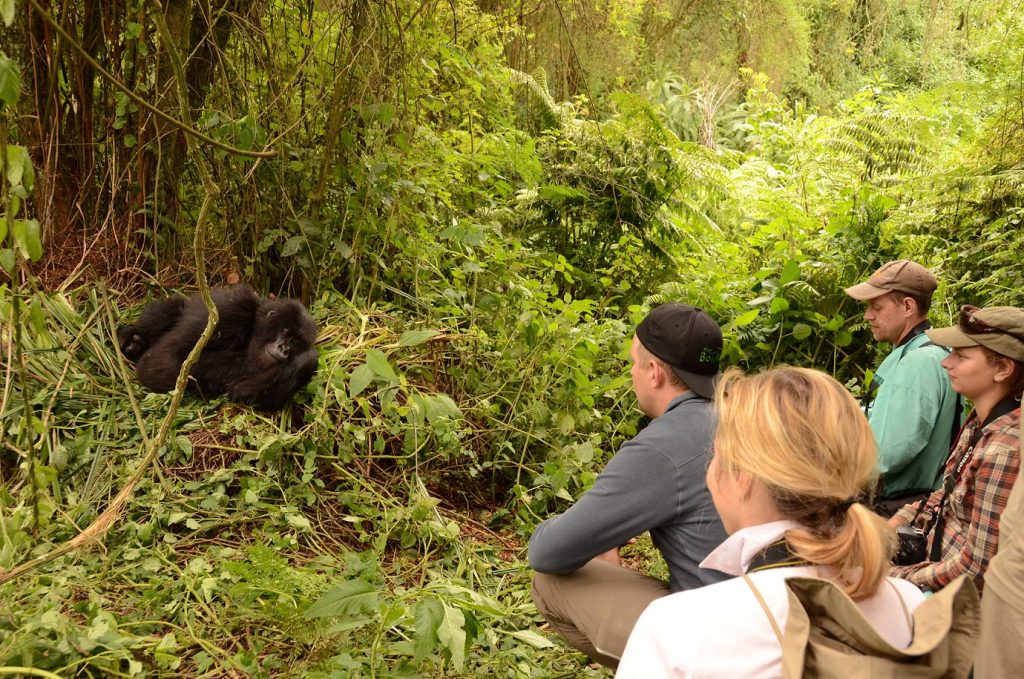
About Gorilla Habituation Experience In Uganda
The Gorilla Habituation Experience Uganda offers a rare and deeply immersive opportunity to observe mountain gorillas in their natural habitat while actively participating in their gradual adaptation to human presence. In Uganda, this exceptional experience is mainly conducted in the southern sector of Bwindi Impenetrable National Park, particularly the Rushaga area, although Uganda’s broader conservation efforts also extend to gorilla habitats within Mgahinga Gorilla National Park.
Unlike standard gorilla trekking, the habituation experience is far more in-depth and exclusive. It allows only four visitors per day to join a team of researchers, rangers, and conservationists as they follow and observe a semi-habituated gorilla family for up to four hours. This intimate setting provides a unique chance to understand gorilla behavior, social structure, and daily interactions while witnessing the careful scientific process of building trust between wild gorillas and humans.
Many travelers often ask how this differs from gorilla trekking. In gorilla trekking, up to eight visitors hike into the forest to spend one hour with a fully habituated gorilla family. In contrast, the habituation experience is longer, more exclusive, and focused on conservation work in progress rather than established tourism encounters.
The habituation process itself is a long-term conservation effort that can take 2–3 years. During this time, researchers and trackers consistently spend time with a gorilla group, slowly helping them become accustomed to human presence without altering their natural behavior. Once fully habituated, these gorilla families may eventually be opened for regular trekking experiences.
Choosing the Gorilla Habituation Experience Uganda is more than a safari—it is a meaningful conservation journey. Every moment spent in the forest contributes to the protection and survival of one of the world’s most endangered species, offering visitors not only a wildlife encounter but also a powerful connection to conservation in action.
How is the gorilla habituation experience different from regular gorilla trekking?
The Gorilla Habituation Experience and regular gorilla trekking are both incredible ways to encounter mountain gorillas in the wild, but they differ significantly in duration, intensity, group size, and level of interaction.
Regular gorilla trekking allows visitors to spend one hour with a fully habituated gorilla family—gorillas that are already accustomed to human presence. The Gorilla Habituation Experience, however, offers up to four hours with a semi-habituated gorilla family that is still gradually becoming used to humans, allowing for a longer and more detailed observation of their behavior in the wild.
In regular trekking, gorillas are fully habituated and generally calm and comfortable around human visitors, making the experience more structured and predictable. In contrast, during habituation, gorillas are still adapting to human presence, which allows visitors to witness more natural and unfiltered behaviors such as silverbacks displaying dominance, juveniles playing, and family members interacting in a more authentic and less accustomed way.
The habituation experience is also highly educational, as visitors join researchers, rangers, and conservationists in the field. It provides deep insight into gorilla communication, social structure, and the step-by-step process of habituation, which can take several years to complete—making it both a safari and a conservation learning journey.
Regular gorilla trekking permits allow up to eight visitors per gorilla family, while gorilla habituation is highly exclusive with only four participants allowed per day, offering a more private and immersive experience.
Overall, the Gorilla Habituation Experience is longer, more intensive, and more immersive, ideal for travelers seeking a deeper connection with wildlife and conservation, while regular gorilla trekking is shorter and more accessible, offering a classic and unforgettable gorilla encounter.
How Gorilla Habituation Experience Uganda Works
Initial Observation: Gorilla habituation begins with long-term field monitoring, where researchers and trained trackers observe a gorilla family from a safe distance of over 100 meters. This stage can last several months as the team carefully studies the group’s daily routines, feeding areas, nesting sites, social interactions, and movement patterns. At this point, there is no direct contact with the gorillas, as the goal is to understand their natural behavior without causing any disturbance or stress.
Gradual Approach: After the gorillas show signs of tolerating distant human presence, rangers and researchers begin a very controlled and slow approach. The distance between humans and the gorilla family is gradually reduced over time, always prioritizing the animals’ comfort and safety. The team often moves calmly, avoids sudden gestures, and may mimic natural gorilla vocalizations such as soft grunts to communicate peaceful intent and reduce tension. This stage requires patience, consistency, and strict adherence to conservation protocols to ensure the gorillas do not feel threatened.
Trust Building: The most critical stage is gaining the trust of the silverback, as he is the leader and protector of the group. If the silverback accepts the presence of humans, the rest of the family is more likely to tolerate them as well. Researchers use non-threatening body language, including slow movements and submissive postures, to signal that they are not a danger. Over time, the gorillas begin to recognize the trackers as part of their environment, gradually becoming more relaxed and less reactive. This long process eventually leads to a semi-habituated state, allowing controlled human visits as part of conservation tourism.
Where in Uganda Can You Participate in the Gorilla Habituation Experience?
The Gorilla Habituation Experience in Uganda is currently available in only one destination: Bwindi Impenetrable National Park. This UNESCO World Heritage Site is located in the southwestern part of Uganda and is widely recognized as one of the most biologically diverse rainforests in the world. It is also home to more than half of the world’s remaining mountain gorillas, making it a premier destination for gorilla conservation and tourism.
Within Bwindi Impenetrable National Park, the habituation experience is conducted exclusively in the Rushaga sector, situated in the southern region of the park. Rushaga is known for its rugged terrain, thick rainforest, and rich biodiversity, creating the perfect environment for both gorilla conservation work and immersive wildlife experiences. This sector has become a key center for research and habituation activities, where ranger teams and conservationists work closely with semi-habituated gorilla families on a daily basis.
Visitors to Rushaga have the rare opportunity to join these conservation teams in the forest and observe the gradual process of habituation, gaining deeper insight into gorilla behavior and protection efforts. Unlike standard gorilla trekking, this experience allows extended time in the field, offering a more intimate and educational encounter with these endangered primates.
Reaching Rushaga typically begins with travel to Kampala or Entebbe, Uganda’s main entry points. From there, visitors can either take a domestic flight to Kisoro airstrip, the closest access point, or embark on a scenic road journey of approximately 8–10 hours. While the journey is long, it rewards travelers with breathtaking landscapes and an unforgettable safari experience.
Rushaga also offers a range of eco-lodges and safari accommodations, making it an ideal base for travelers seeking comfort while staying close to nature. Overall, the Gorilla Habituation Experience in Bwindi’s Rushaga sector remains one of the most exclusive and remarkable wildlife encounters in Uganda.
Purpose of theGorilla Habituation Experience Uganda
The purpose of the gorilla habituation process is to gradually and safely accustom wild mountain gorillas to the presence of humans in a non-threatening way. Mountain gorillas are naturally shy and highly sensitive animals, and without careful introduction, they may become stressed or defensive when encountering humans. Habituation ensures that gorillas learn to recognize humans as neutral and non-dangerous, without altering their natural behavior or disrupting their way of life.
The process is slow and highly controlled, typically taking around two to three years, and is carried out by trained park rangers, trackers, and researchers. These teams visit gorilla families regularly, observing them from a safe distance while slowly building trust over time. They use calm movements, submissive body language, and sometimes mimic natural gorilla vocalizations to communicate peaceful intent and reduce tension within the group.
This gradual approach allows researchers to safely study gorilla behavior, social structure, feeding habits, and health patterns in their natural environment. As trust increases, the gorillas become more tolerant of human presence, eventually allowing close observation without showing signs of fear or aggression.
Gorilla habituation is also essential for sustainable tourism and conservation funding. Once a gorilla family is fully habituated, it can be opened for controlled tourism, generating income that supports conservation programs, park management, and local communities. This helps reduce threats such as poaching and habitat destruction by providing economic value to wildlife protection.
Ultimately, the habituation process creates a critical balance between conservation and tourism. It allows scientists to conduct important long-term research while enabling visitors to experience mountain gorillas in a responsible and sustainable way, ensuring their survival for future generations.
Your Contribution to Conservation
$1,800 Permit Fee
The gorilla habituation permit plays a vital role in supporting long-term conservation efforts in Uganda. A significant portion of the fee goes directly to Uganda Wildlife Authority, which manages protected areas, funds anti-poaching operations, and maintains ranger patrols across gorilla habitats. It also supports community development projects such as education, healthcare, and infrastructure in surrounding villages, ensuring that local communities benefit from wildlife tourism and become active partners in conservation. In addition, part of the revenue contributes to habitat protection and research programs that help safeguard mountain gorillas for future generations.
4 Hours with Gorillas
The extended four-hour encounter is not only a rare tourist privilege but also a crucial window for scientific research. During this time, visitors accompany researchers and conservationists who carefully monitor gorilla behavior, feeding patterns, social interactions, and health conditions. This prolonged observation period provides valuable data that helps improve conservation strategies and deepen understanding of gorilla ecology. Unlike standard trekking, the habituation experience allows for more detailed and meaningful observation, contributing directly to ongoing scientific studies and the long-term protection of these endangered primates.
Only 4 People per Group
The strict limit of only four visitors per day ensures that the gorilla habituation experience remains highly controlled and low-impact. This small group size significantly reduces stress on gorilla families and minimizes human disturbance in their natural environment. It also allows for quieter movement in the forest, better observation opportunities, and a more respectful interaction between humans and wildlife. By keeping visitor numbers extremely low, conservation authorities ensure that tourism remains sustainable while prioritizing the well-being and natural behavior of the gorillas.
Duration of the Gorilla Habituation Experience in Uganda
The gorilla habituation experience in Uganda is one of the most immersive wildlife encounters in Africa and typically lasts about four hours with a semi-habituated gorilla family. This is significantly longer than regular gorilla trekking, which allows only one hour with fully habituated gorillas that are already accustomed to human presence.
During the habituation experience, visitors join trained rangers, trackers, and researchers as they follow a gorilla family that is still undergoing the gradual process of becoming used to humans. Because these gorillas are not yet fully habituated, they are more natural, cautious, and less predictable in their behavior, making the experience more authentic and conservation-focused.
The day begins early in the morning with a detailed briefing at the park headquarters. Visitors are then assigned to a tracking team and begin the trek into the forest. The hike itself can take anywhere from a short walk to several hours, depending on the location of the gorilla family, as they move frequently in search of food such as bamboo shoots, fruits, and leaves.
Once the gorilla family is located, the official habituation experience begins. Visitors then spend up to four hours observing the group in their natural environment. During this time, you may witness powerful and emotional behaviors such as silverbacks displaying dominance, mothers caring for infants, juveniles playing energetically, and grooming sessions that strengthen family bonds. The gorillas’ natural reactions are often more visible and less influenced by human presence compared to fully habituated groups.
Throughout the encounter, researchers and conservationists actively monitor and record behavior, sometimes demonstrating gentle communication techniques and guiding visitors on how to move, observe, and behave respectfully in the presence of the gorillas. This makes the experience not only a safari but also a live conservation learning session.
It is important to note that the entire activity is a full-day adventure. From briefing, trekking through dense rainforest, locating the gorillas, spending four hours with them, and returning, the experience requires physical endurance and mental preparation. The terrain can be steep, muddy, and challenging, but the reward is an unforgettable, once-in-a-lifetime encounter with one of the world’s most endangered and intelligent primates.
Overall, the extended duration of the gorilla habituation experience makes it a deeper, more educational, and more intimate wildlife journey compared to standard gorilla trekking.
Cost of Gorilla Habituation Experience Permit in Uganda
The cost of a gorilla habituation experience permit in Uganda is $1,800 per person as of July 2025. This fee is managed by the Uganda Wildlife Authority (UWA) and is higher than the permit for regular gorilla trekking, which costs $800 per person. While it might seem expensive, the higher cost covers the extended time (four hours with the gorillas compared to one hour in the regular trek), the smaller group size allowed (usually only four people), and the additional efforts involved in the habituation process.
This fee is crucial for conservation purposes. A large portion of the money generated from permits goes directly into protecting Uganda’s mountain gorillas and their habitats. For instance, these funds support anti-poaching patrols, community initiatives around national parks, and the training and salaries of rangers and trackers who work tirelessly to monitor the gorillas. By participating, you’re directly contributing to the longevity and sustainability of conservation programs.
It’s also worth noting that gorilla habituation can only be done in the Rushaga and Nkuringo regions of Bwindi Impenetrable National Park, which helps control the impact of human activity and ensures the experience is as eco-friendly as possible. The exclusivity, combined with the critical role the fees play in conservation, gives a deeper purpose to the price.
Although it is costly, many people consider the permit fee a once-in-a-lifetime investment. Observing wild gorillas for an extended time, witnessing rare behaviors, and supporting meaningful conservation efforts make the price worthwhile. For example, you might see a mother teaching her baby how to climb or a silverback asserting dominance all moments that are priceless for nature lovers.
What should I expect during the Gorilla Habituation Experience Uganda?
The gorilla habituation experience in Uganda is a rare, once-in-a-lifetime opportunity that offers a deeper and more immersive encounter with mountain gorillas than regular trekking. During this experience, you spend up to four hours with a semi-habituated gorilla family as they gradually become accustomed to human presence. Because these gorillas are still in the process of habituation, the encounter feels more natural, raw, and unpredictable, offering a truly authentic wildlife experience.
Your day begins early in the morning with a pre-trek briefing conducted by expert guides and park rangers, typically at the park headquarters in Bwindi Impenetrable National Park. During this session, you are introduced to the gorilla habituation rules, safety guidelines, and expectations in the forest. The team may also share background information about the specific gorilla family you will be tracking, including their behavior, composition, and progress in the habituation process.
After the briefing, you begin your trek into the dense rainforest. The hike can take anywhere from 1 to 3 hours or more, depending on the movement of the gorilla family. The terrain is often steep, muddy, and physically demanding, requiring good fitness and patience. As you move deeper into the forest, you are surrounded by towering trees, thick vegetation, and the sounds of nature, creating a true wilderness atmosphere.
Once the gorilla family is located, the habituation experience officially begins. You will spend up to four hours observing them closely while researchers and conservationists monitor their behavior and record important data. During this time, you may witness natural behaviors such as feeding, grooming, playing, resting, and occasional displays of dominance by the silverback. Since the gorillas are not yet fully habituated, their reactions can be cautious and unpredictable, making the experience more genuine and exciting.
Unlike regular gorilla trekking, this experience offers a deeper sense of connection because you are witnessing an active conservation process. You are not just observing wildlife—you are part of a scientific effort that helps gorillas gradually adapt to human presence in a safe and controlled way.
The experience is physically demanding but emotionally rewarding. By the end of the day, you will have not only encountered one of the world’s most endangered species in its natural habitat but also contributed to its long-term conservation and survival.
How Close Can You Get to the Gorillas During the Habituation Experience?
Getting close to mountain gorillas during the habituation experience is an extraordinary privilege—but it is also carefully controlled to protect both visitors and these endangered animals. In most cases, you will observe the gorillas from a recommended distance of about 7–10 meters (21–30 feet), as regulated by the Uganda Wildlife Authority. This guideline is strictly enforced to ensure safety, minimize stress, and allow the gorillas to behave naturally in their environment.
Because the gorilla habituation experience takes place with semi-habituated groups, the encounters feel more dynamic and less predictable than standard gorilla trekking. While the 7–10 meter rule is the standard, the actual distance can sometimes feel shorter or slightly longer depending on how the gorillas move through the forest. These animals are free-ranging, and they may change direction, feed, rest, or move closer to the group without warning.
Occasionally, individual gorillas—especially curious juveniles—may approach visitors out of interest. In such moments, it is essential to remain calm, avoid sudden movements, and follow the instructions of the ranger team. You may be asked to stay still, lower your gaze, and avoid direct eye contact, as this can be interpreted as a challenge in gorilla behavior. The guiding rangers and researchers will gently manage the situation to ensure the interaction remains safe and non-threatening for both sides.
Another critical reason for maintaining distance is disease prevention. Mountain gorillas share approximately 98% of their DNA with humans, which makes them highly vulnerable to human-borne illnesses such as influenza or respiratory infections. Even minor contact or close proximity without precautions could pose a serious risk to their survival. For this reason, strict hygiene and distance rules are enforced throughout the experience.
Despite these safety measures, the habituation experience still offers incredibly intimate and emotional wildlife encounters. You will be able to clearly observe their facial expressions, grooming behavior, social interactions, and communication sounds from a respectful distance. The feeling of being in the presence of a wild gorilla family in their natural habitat is both humbling and unforgettable.
In summary, you should expect to maintain a controlled distance of around 7–10 meters, but remain aware that gorillas may occasionally come closer on their own terms. This balance between safety, respect, and natural behavior is what makes the habituation experience one of the most powerful wildlife encounters in the world.

What Should You Wear and Bring for the Gorilla Habituation Experience?
The gorilla habituation experience in Uganda, carried out in the lush rainforest of Bwindi Impenetrable National Park, requires careful preparation in terms of clothing and gear. Because the trek involves hiking through dense vegetation, steep and often muddy terrain, and spending extended time in the forest with mountain gorillas, what you wear and carry plays a major role in your comfort and safety.
You should wear long-sleeved shirts and long trousers to protect your skin from scratches, insects, and thorny plants. Neutral or earthy colors are recommended as they blend well with the forest environment and are less likely to disturb wildlife. Sturdy, waterproof hiking boots with strong grip are essential due to slippery and uneven trails. A light rain jacket or poncho is also important because weather in the rainforest can change quickly at any time of day. Dressing in layers is highly recommended, as mornings can be cold while midday hikes become warmer. Additional items such as light gloves, a hat, and optional gaiters can provide extra protection and comfort during the trek.
For what to bring, a refillable water bottle is essential to stay hydrated throughout the long trek, while energy snacks or light packed food help maintain your energy levels. A small backpack is useful for carrying your essentials comfortably. Photography is allowed, but you must bring a camera without flash, as flash photography is strictly prohibited to protect the gorillas. Other helpful items include binoculars for wildlife viewing, insect repellent, and a face mask, which is sometimes required to reduce the risk of disease transmission to gorillas. Since mountain gorillas are highly susceptible to human illnesses, health guidelines are strictly enforced by the Uganda Wildlife Authority, and visitors showing signs of sickness are not allowed to participate.
In summary, dressing appropriately and packing wisely ensures that you are comfortable, safe, and fully prepared to enjoy this rare and unforgettable wildlife experience deep in Uganda’s rainforest.
What are the rules and guidelines for interacting with mountain gorillas?
Interacting with mountain gorillas is a rare and privileged experience, but it comes with strict rules designed to protect both visitors and these critically endangered animals. Mountain gorillas are highly sensitive to human presence, and these guidelines help ensure their safety, reduce stress, and prevent the transmission of diseases during encounters in their natural habitat, including Bwindi Impenetrable National Park.
One of the most important rules is to maintain a minimum distance of about 7 meters (23 feet) from the gorillas at all times. This buffer zone helps minimize the risk of disease transmission, as gorillas share a high genetic similarity with humans and are vulnerable to illnesses such as colds and flu. If gorillas move closer on their own, visitors are advised to remain calm and slowly step back when possible, without causing sudden movements.
Direct contact with gorillas is strictly prohibited. Visitors must never attempt to touch, feed, or approach them. Even seemingly harmless gestures can be misinterpreted as a threat or cause unnecessary stress to the animals. The key principle is to observe quietly and respectfully, allowing the gorillas to behave naturally.
Maintaining a calm and quiet environment is also essential. Loud voices, shouting, or sudden movements can disturb the gorillas and alter their natural behavior. If you need to speak, it should be in a very low voice, although silence is generally encouraged to enhance both safety and the overall experience.
Hygiene is another critical aspect of gorilla interaction. Visitors are advised to cover their mouth and turn away if they need to cough or sneeze, and anyone showing symptoms of contagious illness is not permitted to join the trek. Littering in the forest is strictly forbidden, as maintaining a clean environment is vital for conservation and ecosystem protection.
All visitors must closely follow the instructions of experienced rangers and guides provided by the Uganda Wildlife Authority. These professionals are trained to manage gorilla encounters safely and will guide visitor behavior throughout the experience. In rare cases where a gorilla shows signs of agitation or charges, visitors are typically instructed to remain still, crouch down, and avoid direct eye contact until the situation settles.
How does the gorilla habituation experience contribute to conservation efforts?
The gorilla habituation experience is much more than an exciting wildlife adventure it plays a significant role in the conservation of these critically endangered animals. Gorilla populations in Uganda and nearby regions face threats such as poaching, habitat destruction, and the spread of diseases. The habituation process and tourism around it help mitigate these threats and support long-term survival efforts.
Firstly, the experience allows researchers, trackers, and guides to work closely with specific gorilla groups to gradually get them comfortable with small, non-threatening groups of humans. This process is vital for studying the gorillas’ behavior, health, and interactions, which provides data to guide ongoing conservation strategies.
Financially, the habituation experience generates significant revenue through permit fees. Permits for habituation which allow for four hours with gorillas cost more than regular gorilla trekking permits. These funds are reinvested into conservation programs, anti-poaching initiatives, and community development projects in villages surrounding the forests. When locals benefit from tourism, they are more likely to support conservation efforts and help protect gorillas from poaching or habitat destruction.
Additionally, habituation experiences promote awareness and education. Visitors return home with a deeper understanding of conservation challenges faced by gorillas. Many share their experiences, advocate for conservation-focused travel, or even donate to organizations working on behalf of gorillas.
For example, when poaching is reduced due to increased patrols funded by permits, or when local communities receive education and economic benefits, the lives of gorillas are directly improved. Thus, the habituation experience fosters coexistence between humans and wildlife, a cornerstone in protecting mountain gorillas.
Best Time of the Year to Participate in the Gorilla Habituation Experience Uganda
Uganda offers gorilla habituation experiences throughout the year, but the most favorable time to visit is during the dry seasons, which run from December to February and June to September. These months are widely considered the best period for this once-in-a-lifetime adventure in Bwindi Impenetrable National Park, as they provide better trekking conditions and more comfortable wildlife viewing.
During the dry seasons, the forest trails are generally less muddy and easier to navigate, making the hike less physically demanding. The weather is also more stable, with reduced rainfall, which allows for a smoother and more enjoyable trekking experience. In addition, the vegetation tends to be slightly less dense, improving visibility and making it easier to observe gorilla behavior once you locate the family.
The wet seasons, which occur from March to May and October to November, present a different experience. These months bring heavier rainfall, which makes the trails more slippery and challenging to hike. However, the wet season also has its advantages. The rainforest is at its most lush and vibrant, offering stunning scenery and a more dramatic natural setting. Tourist numbers are generally lower during this period, which can make the experience feel more exclusive. Additionally, gorillas often move to lower elevations in search of food, which can sometimes reduce trekking distances.
Despite the year-round availability of the experience, the dry seasons remain the most popular choice due to their balance of comfort, accessibility, and higher chances of smooth trekking conditions. Because demand is higher during these peak months, it is strongly recommended to book permits early to secure availability.
In conclusion, while both seasons offer unique advantages, the dry months provide the most convenient and enjoyable conditions for most travelers. With proper preparation and the right mindset, however, every season offers a rewarding opportunity to experience Uganda’s incredible mountain gorillas in their natural habitat.