Gorilla Trekking in Bwindi vs Mgahinga | Which One is Better?
Mgahinga vs Bwindi comparison discover which destination offers the best experience before you book your Uganda safari. Tracking mountain gorillas in their natural habitat is truly unmatched, and it’s one of the key reasons Uganda ranks among the world’s top safari destinations.
The global population of mountain gorillas is currently estimated at around 1,080 individuals, found only in four protected areas: Bwindi Impenetrable National Park and Mgahinga Gorilla National Park in Uganda, Virunga National Park, and Volcanoes National Park.
Uganda stands out for two main reasons. First, it is home to more than half of the world’s remaining mountain gorillas. Second, it offers two distinct trekking locations—Bwindi and Mgahinga—giving travelers more flexibility and diversity in their gorilla trekking experience.
This often leaves travelers wondering, “What is the difference between gorilla trekking in Bwindi and Mgahinga National Parks? Which one offers the best experience?” Here are the answers to guide your decision.
To begin with, Bwindi Impenetrable National Park covers about 321 square kilometers in southwestern Uganda. Although relatively small by global standards (ranking as the third smallest of Uganda’s ten national parks after Mgahinga and Semliki National Park), this UNESCO World Heritage Site is incredibly rich in biodiversity.
Bwindi is home to around 120 mammal species, including 10 primate species such as the iconic mountain gorillas. The park also shelters small antelopes and nocturnal animals like jackals, civets, African golden cats, and even leopards, alongside giant forest pigs. Bird enthusiasts will be thrilled by over 350 bird species, while nature lovers can also spot more than 220 butterfly species within this lush tropical rainforest.
On the other hand, Mgahinga Gorilla National Park, at just 34 square kilometers, is Uganda’s smallest national park—but equally remarkable for gorilla trekking. The park protects the Ugandan slopes of three majestic Virunga volcanoes: Mount Gahinga, Mount Muhabura, and Mount Sabyinyo.
Mgahinga forms part of the larger Virunga Conservation Area, which also includes Virunga National Park and Volcanoes National Park. Despite its size, the park hosts over 76 mammal species and about 100 bird species, offering a unique and scenic wildlife experience.
With this in mind, here is a detailed comparison between gorilla trekking in Bwindi and Mgahinga Gorilla National Park.
Mgahinga vs Bwindi comparison| Mountain Gorilla Population and Habituated Families
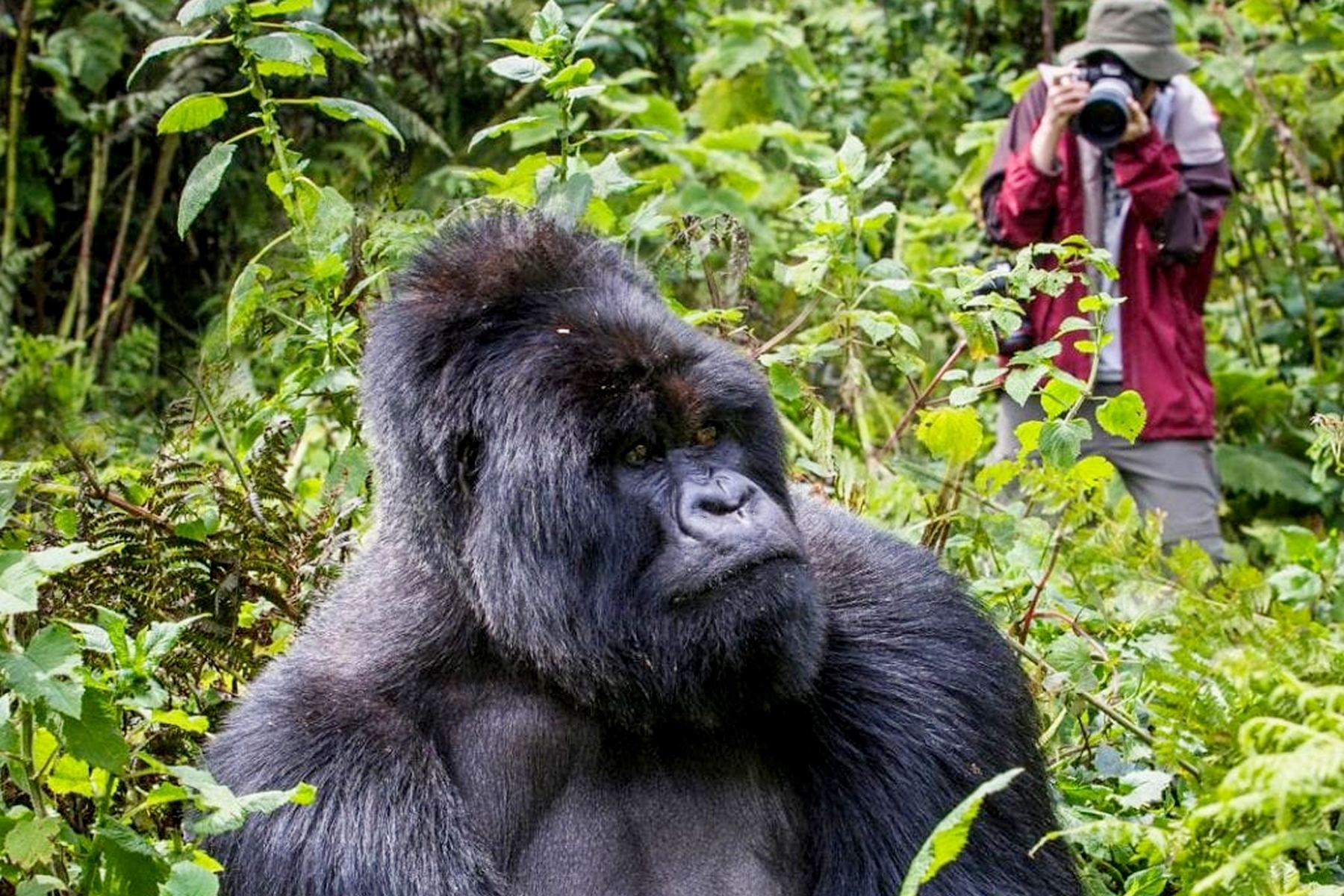
Bwindi Impenetrable National Park is home to approximately 460 mountain gorillas—about three-quarters of Uganda’s total population and nearly half of the world’s remaining mountain gorillas. This high concentration means the park offers more habituated families for trekking. Out of roughly 40 gorilla groups in Bwindi, about 20 have been fully habituated and are open for tracking by visitors.
Gorilla trekking in Bwindi is also spread across four sectors—Buhoma, Ruhija, Rushaga, and Nkuringo—each hosting multiple habituated families. This provides greater flexibility in securing permits and increases your chances of finding availability, even during peak seasons.
On the other hand, Mgahinga Gorilla National Park has a smaller population of about 80 mountain gorillas. The park currently features one habituated group, the famous Nyakagyezi family, available for trekking. While this means fewer options in terms of group selection, it offers a more intimate and less crowded experience.
With fewer trekkers in Mgahinga, briefings are typically quieter and the overall trekking experience feels more exclusive compared to Bwindi. However, it’s important to note that gorilla permit prices are the same in both parks: $800 for foreign non-residents, $700 for foreign residents, and UGX 300,000 for East African citizens
The Gorilla Habituation Experience
Bwindi Impenetrable National Park is the only destination in Uganda—and indeed in the world—where the exclusive Gorilla Habituation Experience is offered. This unique activity takes place in the southern sectors of Nkuringo and Rushaga, where a few gorilla families are still undergoing the habituation process.
These are semi-habituated gorillas, meaning they are gradually being accustomed to human presence. Unlike standard gorilla trekking, this experience allows visitors to spend up to four hours with the gorillas—providing ample time for photography, observation, and filming in a more immersive setting.
The is also more limited and intimate. Only 4 visitors are permitted per group per day, compared to 8 visitors during regular gorilla trekking. This smaller group size enhances the overall experience, offering a deeper, more personal connection with these incredible primates.
The Gorilla Habituation permit costs $1600 perperson
Possibility of Sighting Mountain Gorillas
When it comes to gorilla trekking, one of the most important concerns for travelers is the likelihood of actually seeing these incredible primates. The good news is that both Bwindi Impenetrable National Park and Mgahinga Gorilla National Park offer an exceptionally high success rate—often close to 100%.
In Bwindi, the large number of habituated gorilla families spread across four sectors (Buhoma, Ruhija, Rushaga, and Nkuringo) significantly increases the chances of sightings. With experienced trackers heading out early each morning to locate the gorillas, visitors are guided directly to their assigned family, making encounters almost guaranteed. The presence of multiple groups also provides flexibility, especially during peak seasons.
Mgahinga, on the other hand, has a more intimate setup with one habituated family—the Nyakagyezi group. In the past, this family was known for frequently crossing borders into Rwanda and the Democratic Republic of Congo, which occasionally made sightings unpredictable. However, over the past few years, the Nyakagyezi family has settled permanently within Mgahinga, greatly improving the reliability of sightings.
Today, gorilla trekking in Mgahinga is just as dependable as in Bwindi, with the added advantage of fewer crowds and a more exclusive experience. Whether you choose Bwindi for its variety or Mgahinga for its tranquility, the possibility of encountering mountain gorillas in their natural habitat is almost certain in both parks.
Difficulty of Gorilla Trekking
Gorilla trekking in both Bwindi Impenetrable National Park and Mgahinga Gorilla National Park is physically demanding, as it involves hiking through steep, rugged terrain in search of mountain gorillas. Treks can last anywhere from one to several hours, depending on the location of the gorilla family on a given day.
However, trekking in Mgahinga is generally considered less challenging. The Nyakagyezi gorilla family tends to roam within a smaller, more predictable range, making them easier to locate. Additionally, the vegetation in Mgahinga—largely bamboo forest and open montane terrain—is less dense compared to Bwindi, allowing for relatively easier navigation.
In contrast, Bwindi is known for its thick, impenetrable rainforest and larger size. Trekkers often have to venture deeper into dense vegetation, sometimes on steeper and more uneven terrain, to find the gorillas. This can make the experience more physically demanding, though equally rewarding.
That said, both parks offer porter services and experienced guides to assist trekkers, ensuring that the adventure remains manageable and enjoyable regardless of fitness level.
Possibility of Encountering Other Primates in Bwindi vs Mgahinga
Mgahinga Gorilla National Park offers a unique primate experience in Uganda as the only park where visitors can track both endangered golden monkeys and mountain gorillas—often referred to as “where gold meets silver.” This makes Mgahinga ideal for travelers looking to combine gorilla trekking with golden monkey tracking in a single destination, adding diversity and excitement to their safari.
On the other hand, Bwindi Impenetrable National Park is home to several primate species, including chimpanzees. However, unlike gorillas, chimpanzees in Bwindi are not habituated for tourism, making them difficult to track and rarely seen during visits.
As a result, while Bwindi excels in gorilla trekking and overall biodiversity, Mgahinga stands out for offering a more varied and accessible primate tracking experience beyond just mountain gorillas.
Accommodation Options
Both Mgahinga vs Bwindi comparison offer a range of accommodation options to suit different budgets and travel styles. However, Bwindi stands out with a much wider selection of lodges, making it the more popular choice for many travelers.
Due to its larger size—almost ten times bigger than Mgahinga—Bwindi has a higher concentration of safari lodges spread across its four main sectors. Visitors can choose from budget camps to mid-range lodges and luxurious properties offering world-class amenities, stunning forest views, and easy access to trekking starting points.
In contrast, Mgahinga has fewer accommodation options, reflecting its smaller size and lower visitor numbers. While the selection is more limited, the available lodges still provide comfortable stays and a more intimate, less crowded experience for those exploring the park.
Overall, Bwindi offers greater variety and flexibility in accommodation, while Mgahinga appeals to travelers seeking exclusivity and tranquility

Other Activities to Enjoy Besides Gorilla Trekking
Beyond gorilla trekking, both Mgahinga vs Bwindi comparison offer enriching experiences—but Mgahinga stands out for adventure activities, while Bwindi shines in cultural and forest immersion.
One of Mgahinga’s biggest advantages is volcano hiking. The park protects three of the eight Virunga Volcanoes—Mount Gahinga, Mount Muhabura, and Mount Sabyinyo—giving travelers the rare opportunity to climb these iconic peaks. Each hike rewards visitors with breathtaking panoramic views, unique vegetation zones, and chances to spot birds and other wildlife along the way—an experience not available in Bwindi.
Mgahinga also offers cave exploration, where visitors can explore the historic Garama Cave, once inhabited by the Batwa people. This cave served multiple purposes in the past, including a royal residence, shelter, and even a battlefield, making it a fascinating cultural and historical site.
Both parks provide a powerful cultural experience through interactions with the Batwa community—the original forest dwellers who lived in these areas before they were gazetted as national parks. Visitors can learn about their traditional hunter-gatherer lifestyle, including fire-making using sticks, herbal medicine, bamboo craftsmanship, honey harvesting, and traditional music and dance performances.
Additionally, guided forest walks are available in both parks, offering a slower-paced way to explore the rich biodiversity, discover unique plant species, and enjoy birdwatching.
In summary, Mgahinga is ideal for travelers seeking adventure and diverse outdoor activities, while Bwindi offers deeper forest experiences and equally meaningful cultural encounters.
Mgahinga vs Bwindi comparison Strategic Location
While both parks are located in southwestern Uganda, Bwindi Impenetrable National Park enjoys a more strategic position for combined safari itineraries. It is located relatively close to Queen Elizabeth National Park, making it easy for travelers to combine gorilla trekking with classic wildlife safari experiences in one journey.
The drive between Bwindi and Queen Elizabeth National Park takes approximately 3–4 hours, depending on the sector of Bwindi visited. This convenient connection allows visitors to enjoy the best of both worlds—close encounters with mountain gorillas followed by traditional game drives in Uganda’s most diverse savannah park.
Queen Elizabeth National Park is famous for its tree-climbing lions, as well as abundant wildlife including Uganda kob, elephants, buffaloes, Defassa waterbucks, topis, hippos, and a wide variety of bird species. This proximity makes Bwindi a preferred starting or ending point for many Uganda safari circuits.
In contrast, Mgahinga is more remote and less commonly combined with large savannah safari parks, making Bwindi the more strategic hub for multi-destination wildlife itineraries.
Accessibility – Getting to | Mgahinga vs Bwindi comparison
BothMgahinga vs Bwindi comparison are accessible from both Kampala and Kigali, making them convenient for gorilla trekking safaris in southwestern Uganda.
From Kampala, it takes approximately 8–9 hours of driving to reach either park, depending on the specific sector or lodge location. This scenic journey passes through Uganda’s rolling hills, rural landscapes, and vibrant towns, offering a true road-trip safari experience.
Alternatively, travelers coming from Rwanda’s Kigali City can reach the parks in about 4–5 hours by road via the Katuna or Cyanika border posts for Bwindi, and the Cyanika border for Mgahinga Gorilla National Park. This route is especially popular for visitors seeking shorter travel times and easier access to gorilla trekking.
For added convenience, scheduled domestic flights operated by Aerolink Uganda connect Entebbe International Airport to Kisoro and Kihihi airstrips, providing quick access to both parks and significantly reducing travel time.
In conclusion, while both destinations are fairly accessible, Bwindi offers more route and sector options, whereas Mgahinga provides a simpler and more direct approach. Regardless of the choice, both guarantee unforgettable gorilla trekking experiences in Uganda.