
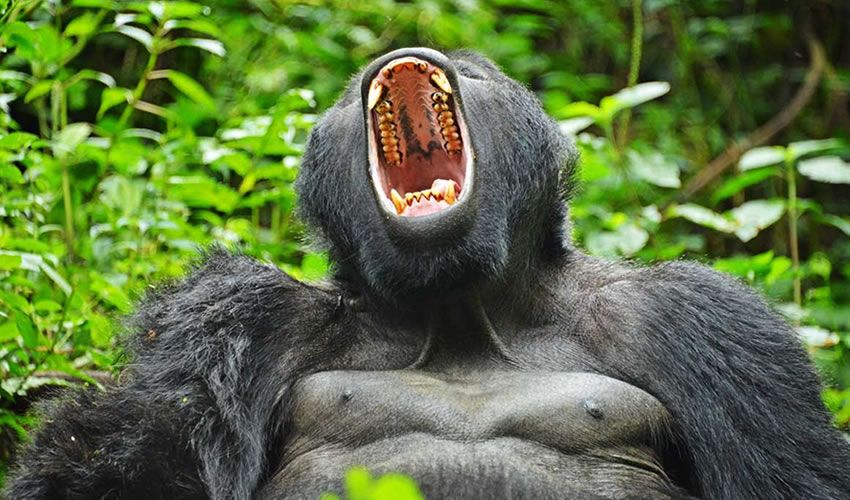
Explore the Mountain Gorilla Interesting Facts, one of the world’s most iconic and endangered primates found in Uganda’s protected national parks and the Virunga volcanic ranges. This in-depth guide takes you closer to their fascinating world, revealing key insights into their behavior, intelligence, family structure, communication, feeding habits, and natural rainforest habitat.
Mountain gorillas live in tight-knit social groups led by a dominant silverback, showing remarkable emotional intelligence, strong family bonds, and complex social interactions. This blog also explains their unique diet of leaves, shoots, fruits, and bamboo, as well as how they adapt to life in high-altitude forest environments.
You will also learn about the serious threats facing mountain gorillas today, including habitat destruction, illegal poaching, disease transmission from humans, and increasing pressure from surrounding human populations. Despite these challenges, conservation success stories in Uganda and the wider Virunga region show how dedicated protection efforts, eco-tourism, and gorilla trekking permits are helping their population slowly recover.
Finally, the article highlights how responsible tourism, community involvement, and conservation programs are playing a vital role in ensuring the survival of these gentle giants for future generations. A must-read for wildlife enthusiasts, researchers, students, and travelers planning a gorilla trekking adventure in Uganda.
Mountain Gorilla Interesting Facts
Around 1,063 Mountain Gorillas Exist in the Wild
There are two species of gorillas in the world: the eastern gorilla and the western gorilla. The mountain gorilla is a subspecies of the eastern gorilla, scientifically known as Gorilla beringei beringei, and is one of the most endangered primates on the planet.
Today, only an estimated 1,063 mountain gorillas remain in the wild, based on the most recent population census results. These surveys are carried out every 5 to 10 years by conservation authorities and wildlife organizations to monitor population changes and track their survival progress.
Despite their endangered status, this number represents a significant conservation success story. Decades ago, mountain gorilla populations were critically low due to poaching, habitat destruction, disease, and human encroachment. However, through strict protection measures, anti-poaching patrols, veterinary care, and regulated gorilla trekking tourism in countries like Uganda, Rwanda, and the Democratic Republic of Congo, their numbers have slowly increased.
Even so, mountain gorillas remain highly vulnerable because they live in limited high-altitude forest habitats and depend heavily on continued conservation efforts to survive.
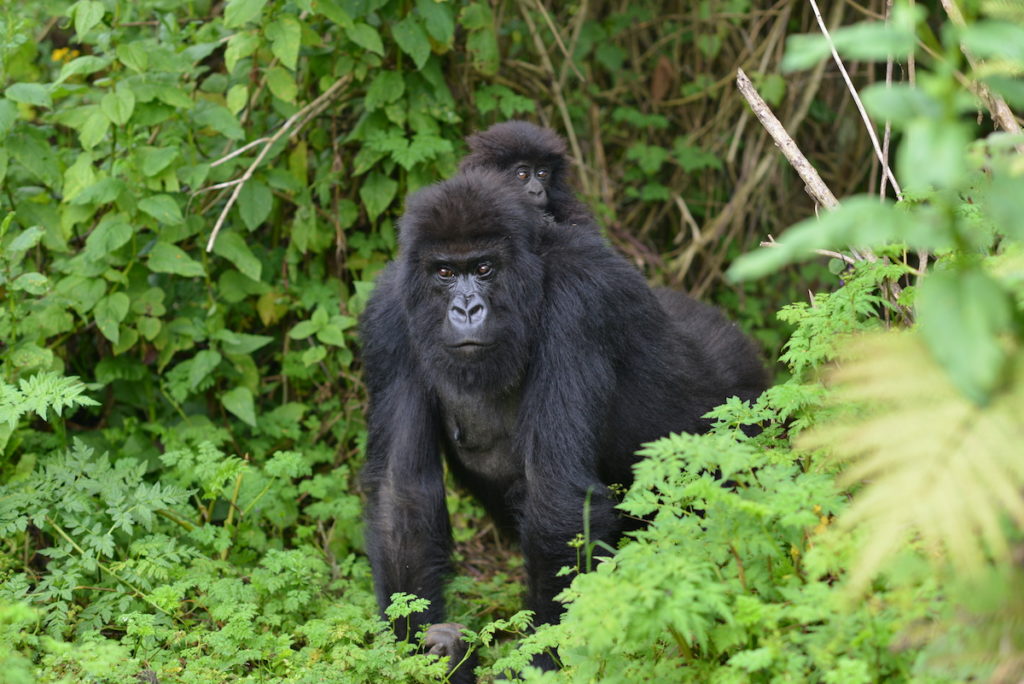
Mountain Gorilla Interesting Facts | They Live in Two Isolated Populations
Mountain gorillas are found only in a very small part of east-central Africa, where they survive in two isolated populations. One population lives in the Virunga Massif, a chain of volcanic mountains that spans three national parks across Uganda, Rwanda, and the Democratic Republic of Congo (DRC). The other population is found in Bwindi Impenetrable National Park in southwestern Uganda, which is ecologically connected to the Sarambwe Nature Reserve in the DRC.
These two groups are completely separated, meaning there is no natural movement or gene flow between them. As a result, each population is carefully monitored to ensure their long-term survival and genetic health.
Mountain gorillas inhabit high-altitude montane and bamboo forests, typically living at elevations ranging from 2,200 to 4,300 meters above sea level. These dense, misty forests provide the cool climate and abundant vegetation they need to survive.
However, their habitat is extremely limited and increasingly fragmented. The forests are surrounded by farmlands, human settlements, and agricultural activity, which puts constant pressure on their environment. This makes conservation efforts in both Uganda and the wider Virunga region critically important for their continued survival.
Mountain Gorilla Interesting Facts | Humans Share About 98% of DNA with Gorillas
Mountain gorillas share approximately 98% of their DNA with humans, making them one of our closest living relatives after chimpanzees. This remarkable genetic similarity is reflected in their behavior, emotions, and social interactions—gorillas can express affection, grief, playfulness, and even form strong family bonds much like humans do.
However, this close genetic link also makes them highly vulnerable to human diseases. Illnesses that may seem mild to us—such as the common cold, flu, or respiratory infections—can be extremely dangerous, and even fatal, to gorillas. Unlike humans, mountain gorillas have not developed the necessary immunity to fight many of these infections.
For this reason, strict health and safety measures are enforced during gorilla trekking experiences in countries like Uganda. Visitors are required to keep a safe distance, wear face masks when necessary, and avoid trekking if they are unwell. These precautions are essential to protect these endangered primates and ensure their long-term survival in the wild.
They Are Among the Largest and Most Powerful Living Primates
Mountain gorillas are among the largest and strongest primates on Earth, with impressive size and physical strength that sets them apart in the animal kingdom. An adult male, known as a silverback, can weigh up to 180 kilograms (about 400 pounds) and stand around 170 cm (over 5.5 feet) tall when on all fours. When upright, they can appear even taller and more imposing.
In comparison, female mountain gorillas are smaller but still powerful, typically weighing around 90 kilograms (about 200 pounds) and reaching heights of up to 150 cm (approximately 4.9 feet).
Despite their immense strength, mountain gorillas are generally gentle and calm animals, especially when undisturbed. Their powerful build is mainly used for protection, foraging, and navigating their dense forest habitats rather than aggression.
Mountain Gorilla Interesting Facts|They Can Spend Much of Their Day Eating
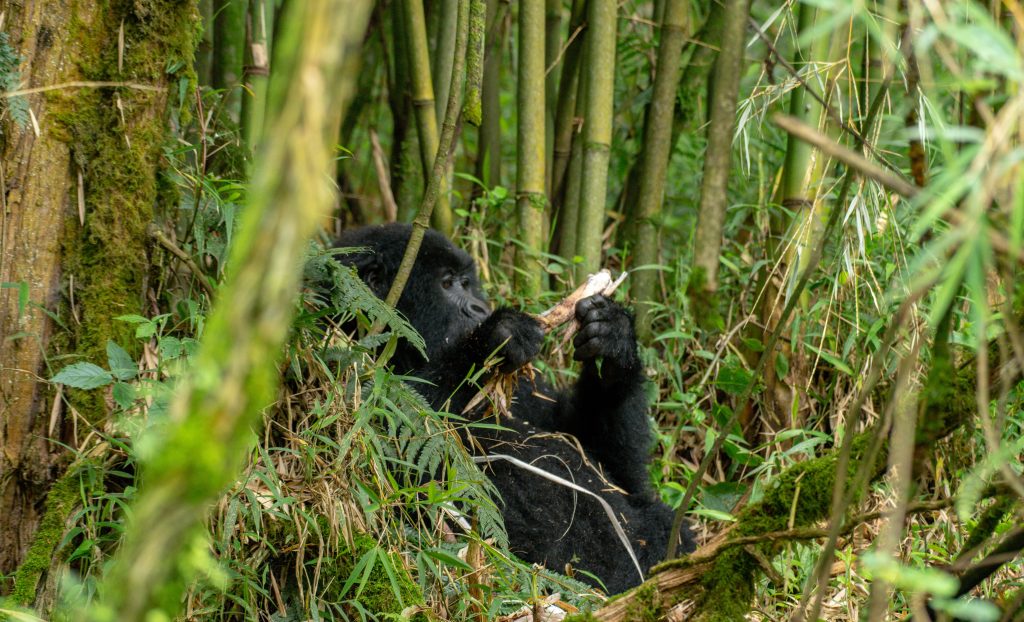
Mountain gorillas are primarily herbivores and dedicate a large part of their daily routine to feeding, spending up to 6–8 hours a day eating, which is roughly a quarter of their time. Their diet is rich and diverse, consisting mainly of leaves, shoots, stems, and other vegetation, which make up about 85% of their total food intake.
They feed on a wide variety of plant species found in their high-altitude forest habitats, including bamboo shoots, wild celery, thistles, and nettles. Because this plant-based diet is relatively low in calories, gorillas need to eat large quantities throughout the day to meet their nutritional and energy requirements.
In addition to vegetation, mountain gorillas occasionally consume insects such as ants, termites, larvae, and snails, which provide extra protein. They also eat roots, tree bark, and even decaying wood, which is an important source of minerals like sodium—something that is often limited in their leafy diet.
Feeding usually takes place in the morning and late afternoon, with periods of rest and social interaction in between. This constant foraging and feeding behavior plays a crucial role in maintaining their strength, health, and survival in the dense montane and bamboo forests they call home.
Mountain Gorilla Interesting Facts | They Build Cozy Nests to Sleep at Night
At the end of each day, mountain gorillas settle down to rest by building comfortable nests from leaves, branches, and other vegetation. These nests are carefully constructed either on the ground or in trees, depending on the gorilla’s age, preference, and safety considerations.
Each gorilla typically builds its own nest every evening, shaping and arranging foliage to create a soft, insulated sleeping spot. Adult males (silverbacks) usually sleep on the ground, while females and younger gorillas may choose either ground nests or tree nests for added security.
Infants and young gorillas share nests with their mothers, staying close for warmth, protection, and bonding. This behavior not only keeps them safe from potential dangers but also reinforces strong family connections within the group.
These nightly nests are temporary and are abandoned the next morning, as the group moves to a new location in search of fresh food. This daily nesting habit is an essential part of their routine, helping them conserve energy and stay comfortable in the cool, high-altitude forest environment.
They Communicate Using Over 16 Different Calls
Mountain gorillas have a complex system of communication, using more than 16 distinct vocalizations to interact with one another. These sounds play a vital role in maintaining group cohesion, expressing emotions, and signaling danger within their tight-knit family units.
Some of the most common sounds include short barks, which are often used when a gorilla feels mildly alarmed, curious, or wants to get the attention of other group members. They also produce grunts and hums, especially during feeding, to show contentment and reassure others that everything is calm and safe.
When it comes to displaying dominance or warning off rivals, male silverbacks use more dramatic forms of communication. They may strut with stiff legs, beat their chests powerfully, and produce loud roars or hoots to assert authority and intimidate potential threats. These displays are usually enough to avoid physical conflict, as they clearly demonstrate strength and control.
In addition to vocal sounds, mountain gorillas also rely heavily on body language, facial expressions, and gestures, making their communication system highly advanced and surprisingly similar to that of humans.
They Live in Close-Knit Family Groups
Mountain gorillas live in stable, close-knit family groups, often referred to as troops, typically made up of around 10 individuals. Each group is usually led by a dominant male known as a silverback, who is responsible for protecting the group, making decisions, and guiding daily activities such as feeding and movement.
Within the group, there are several adult females, juveniles, and infants, all of whom share strong social bonds. Mountain gorillas are highly social animals, and group members show remarkable levels of care and cooperation. Both males and females actively participate in raising the young, often seen hugging, grooming, carrying, and playing with infants. This shared responsibility helps strengthen group cohesion and ensures the survival of the young.
As they mature, gorillas eventually leave their birth groups. Most males will leave to form their own groups or live solitary lives until they attract females, while about 60% of females transfer to other established groups. This natural movement between groups plays a crucial role in preventing inbreeding and maintaining healthy genetic diversity within the population.
These strong family structures and social interactions are key to the survival and well-being of mountain gorillas in the wild.
Mountain Gorilla Interesting Facts | They Can Live Over 40 Years in the Wild
Mountain gorillas have a relatively long lifespan and can live for over 40 years in the wild when protected from threats such as disease, poaching, and habitat loss. Their life cycle is divided into several stages, each marked by distinct physical and social developments.
Gorillas are considered infants from birth until about 3–4 years of age. During this stage, they are highly dependent on their mothers for nourishment, protection, and learning essential survival skills. As they grow, they become more independent and begin to explore their surroundings through play and interaction with other group members.
By around 8 years old, gorillas are classified as adults, although males are not yet fully mature. Male gorillas between 8 and 12 years are known as “blackbacks”, a stage where they continue to grow in size and strength but have not yet reached full dominance.
At approximately 12 years of age, male gorillas develop a distinctive silver patch of hair across their backs and hips, marking their transition into “silverbacks.” At this stage, they are fully mature and capable of leading a group, defending it, and breeding.
This structured life progression reflects the complexity of mountain gorilla societies and highlights their slow development, which makes conservation efforts even more important for their long-term survival.
Mountain Gorilla Interesting Facts | They Face Ongoing Threats to Their Survival
Despite encouraging conservation progress, mountain gorillas remain highly vulnerable and under constant threat, with their survival closely tied to the protection of their fragile habitat.
The greatest threat to mountain gorillas is habitat loss and degradation. As human populations continue to grow in the regions surrounding their forests, more land is cleared for agriculture, settlement, and resource use. This ongoing expansion reduces the already limited forest areas where gorillas live, fragmenting their habitat and putting pressure on their food sources.
In many cases, local communities depend on forest resources for survival. People often enter gorilla habitats to collect firewood, fetch water, or gather other natural resources, which increases the risk of human-gorilla contact. Because gorillas share about 98% of our DNA, they are extremely susceptible to human diseases, and even minor illnesses can have devastating effects on their populations.
Another serious threat comes from illegal hunting practices, particularly the use of snares set for bushmeat. While these traps are not usually intended for gorillas, they can accidentally injure or kill them, causing long-term harm to individuals and groups.
Mountain gorillas also sometimes venture outside protected forests into nearby farmland in search of food, feeding on crops like maize and bananas. This can lead to human-wildlife conflict, as farmers attempt to protect their livelihoods.
Additionally, while gorilla trekking tourism plays a crucial role in conservation funding, poorly managed tourism can negatively impact gorilla health and behavior. Without strict guidelines—such as maintaining safe distances and limiting visitor numbers—tourism can increase stress and the risk of disease transmission.
For these reasons, continued conservation efforts, responsible tourism, and community involvement are essential to ensure the long-term survival of these remarkable primates.